Tucked into East Vancouver, Todd and Rebecca Talbot rebuilt their family home as an owner-led raise and retrofit. From structure to finishes, the work stayed pointed in three directions: Passive House principles, a mid-century approach, and a right-sized plan for daily life on a tight urban lot.
AREZZO
Todd Talbot Builds: For real life


CRAFT visited the Talbots’ East Vancouver home to look closely at an owner-led raise and retrofit built around high-performance goals—without losing the calm, practical feel of a family house.
We discussed intent, constraints, and the decisions that quietly determine comfort, durability, and how the home works day to day.
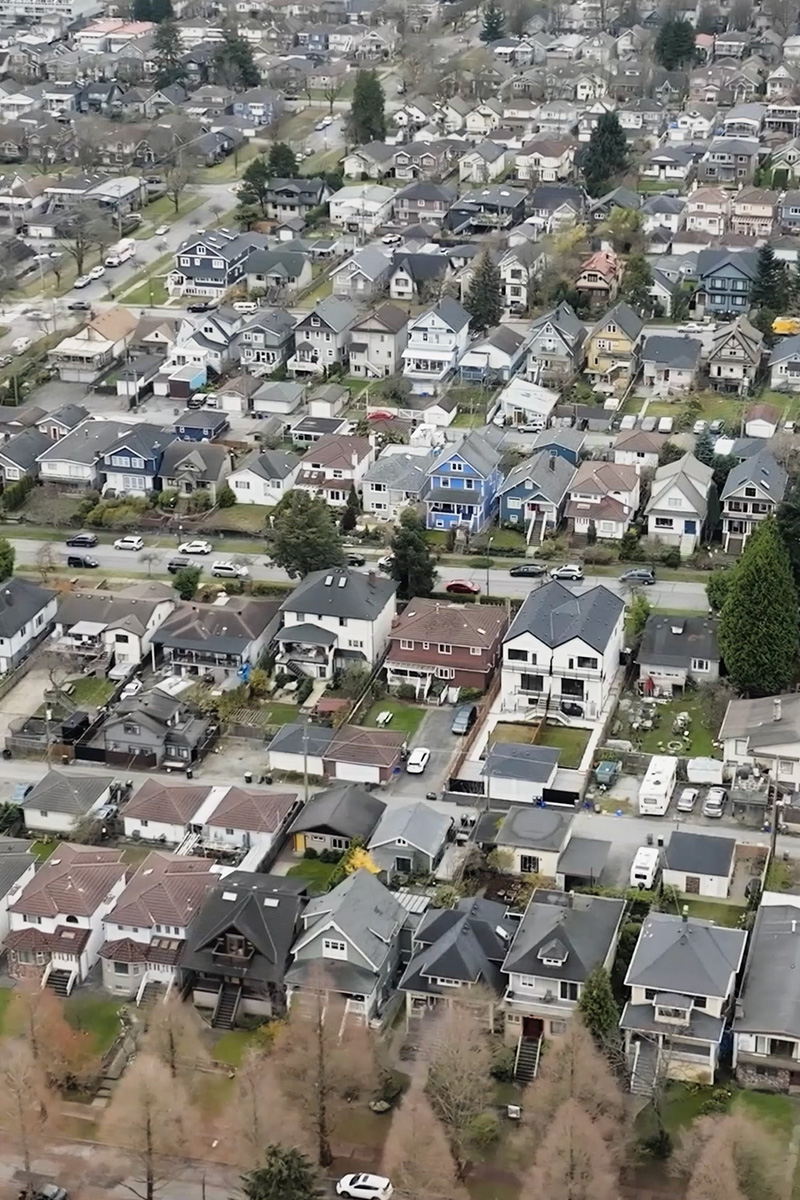
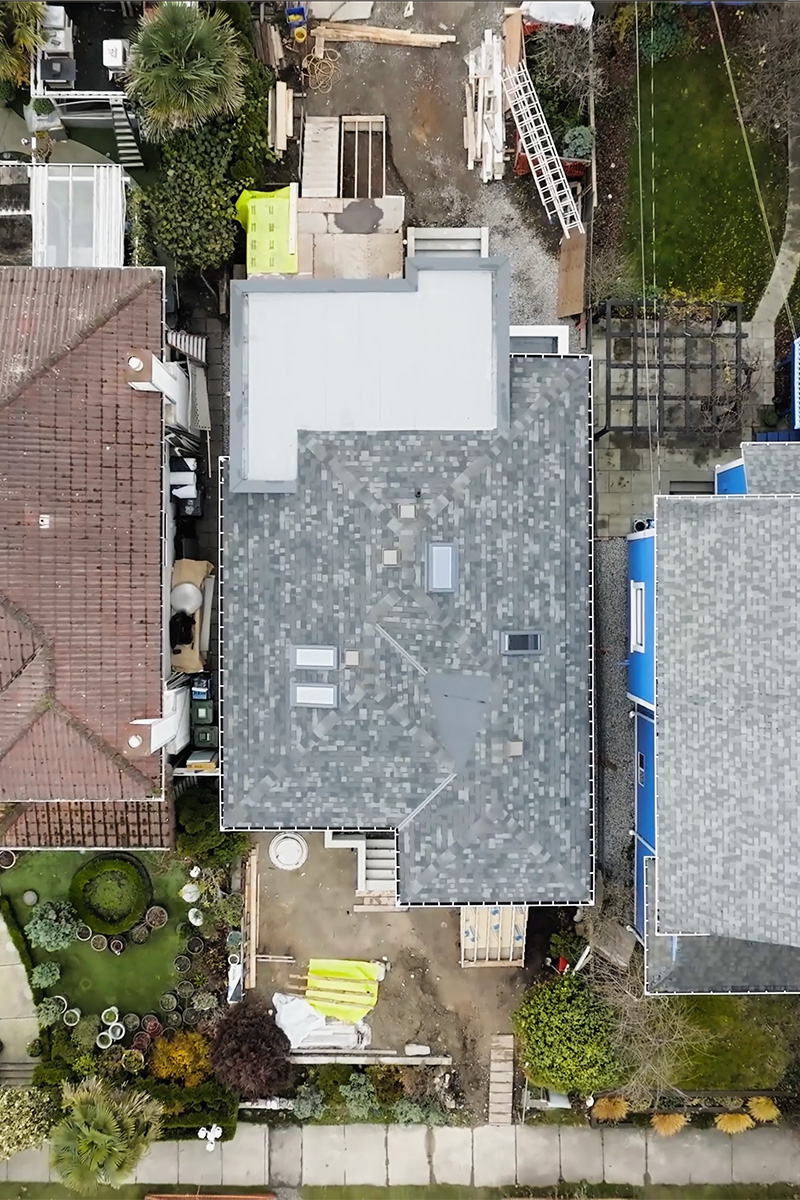
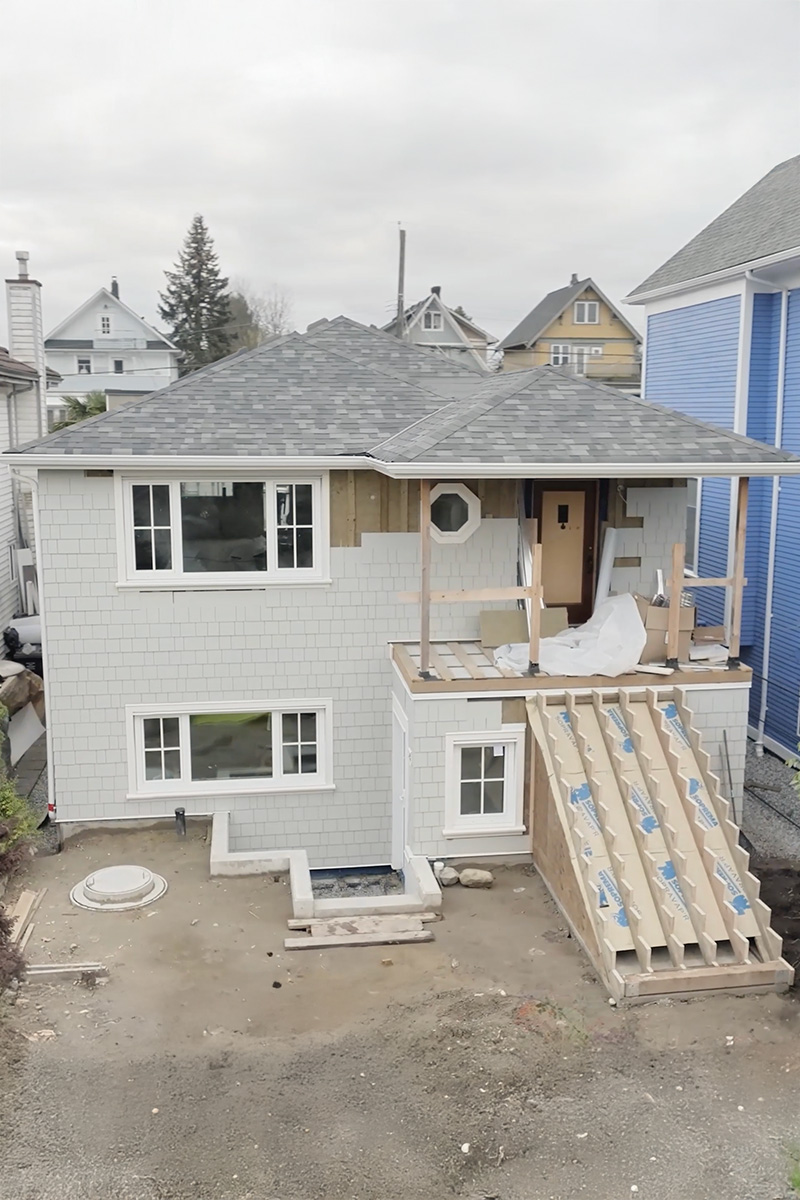
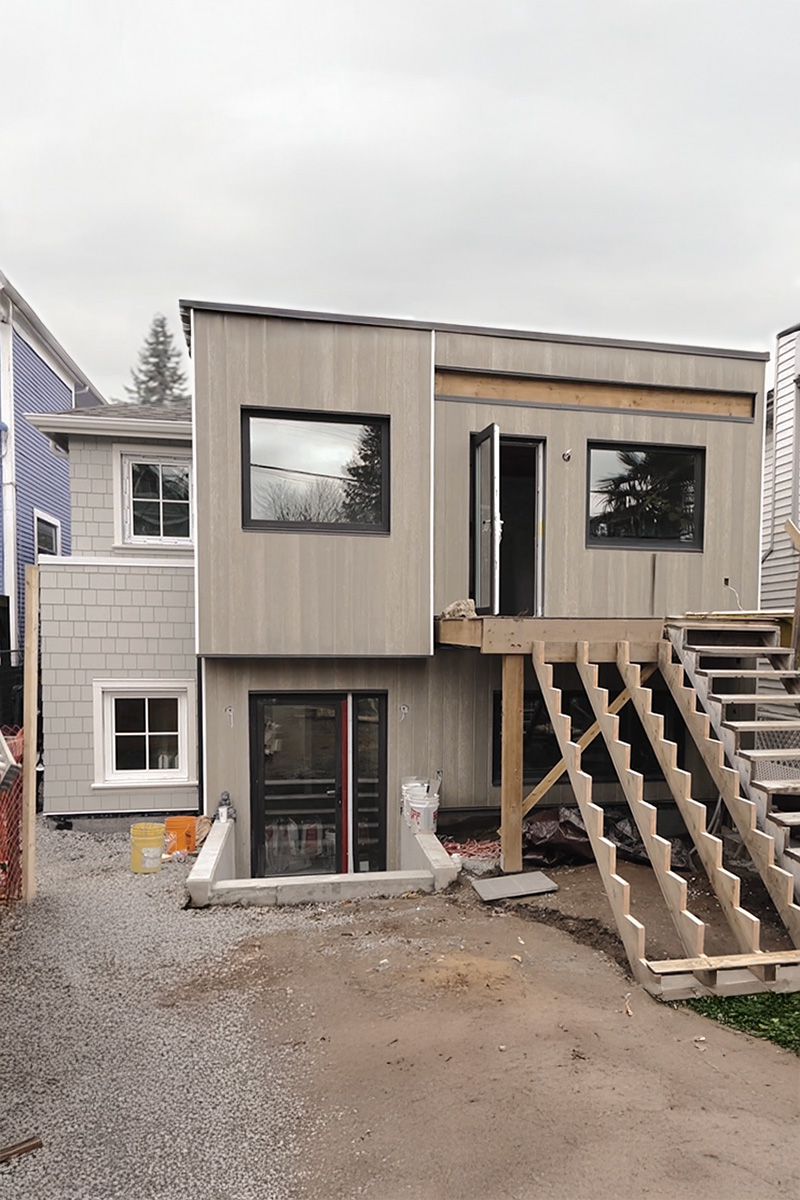
The street-facing presence stays familiar to the neighbourhood, while the rear addition shifts more contemporary—calm, deliberate geometry that distinguishes old from new, and supports the home’s performance goals.
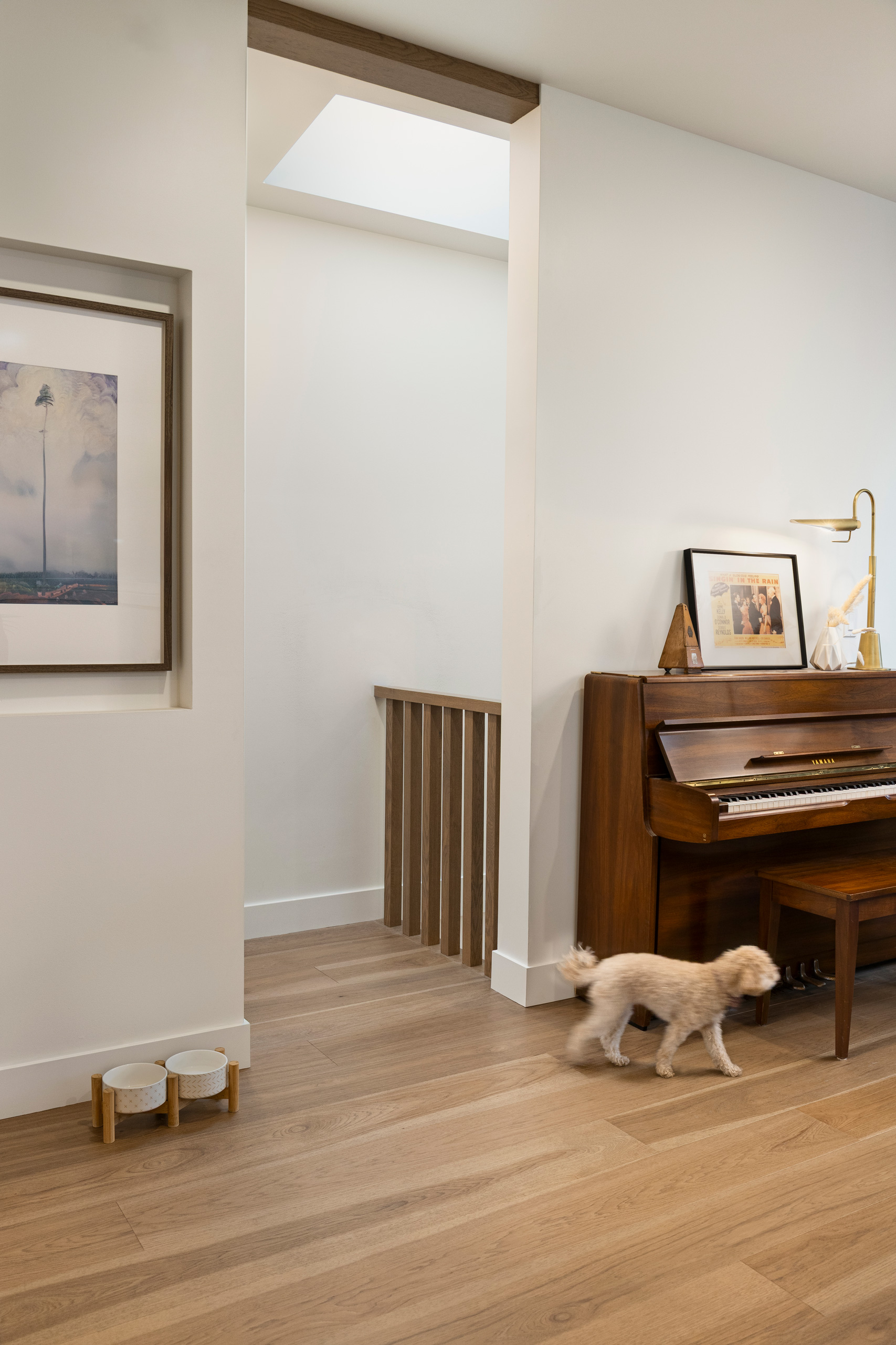
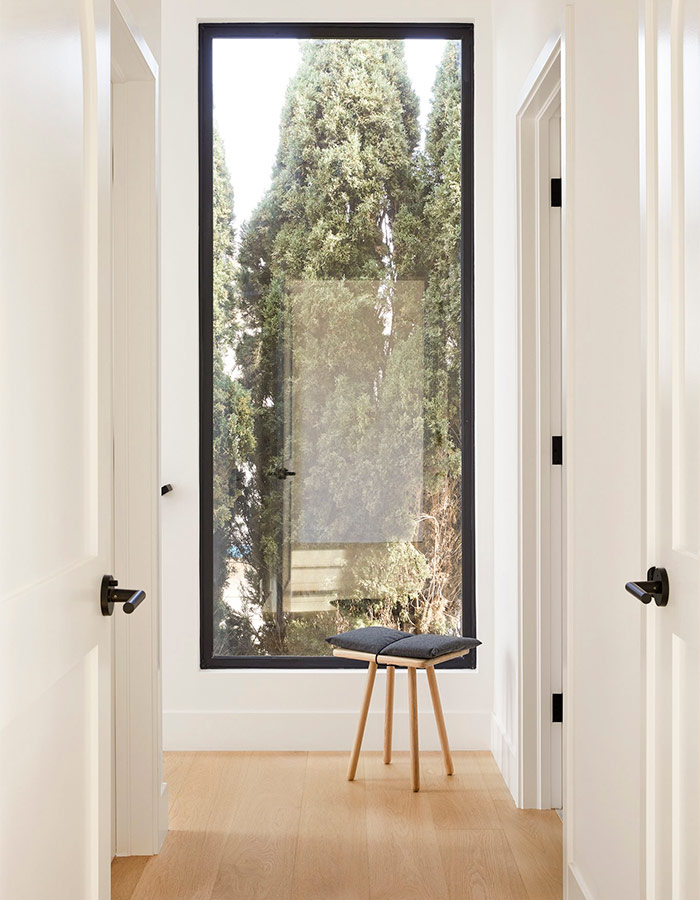
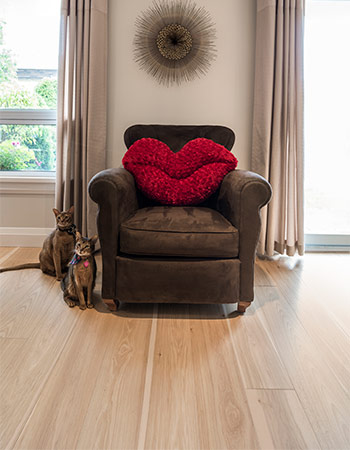
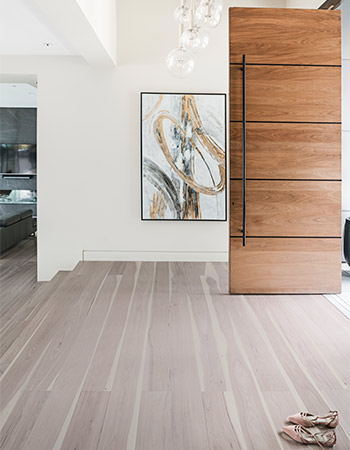
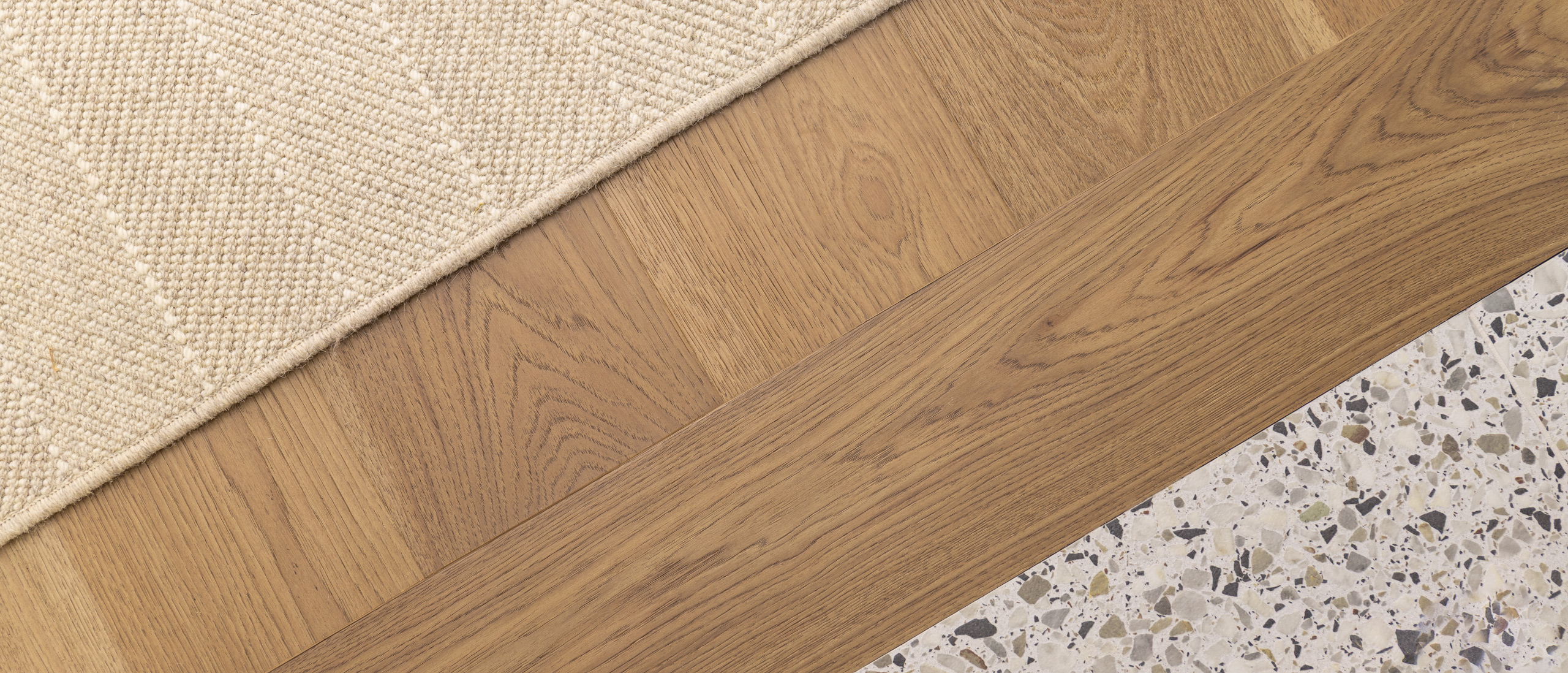
Inside, CRAFT Arezzo runs from the threshold onward. Hickory’s natural contrast—light sapwood against deeper heartwood—forms long, organic lines. A touch of gentle swirl adds quiet movement, but the overall effect stays linear and architectural. In the Talbot home, that grain picks up both the home’s curves and its crisp angles.

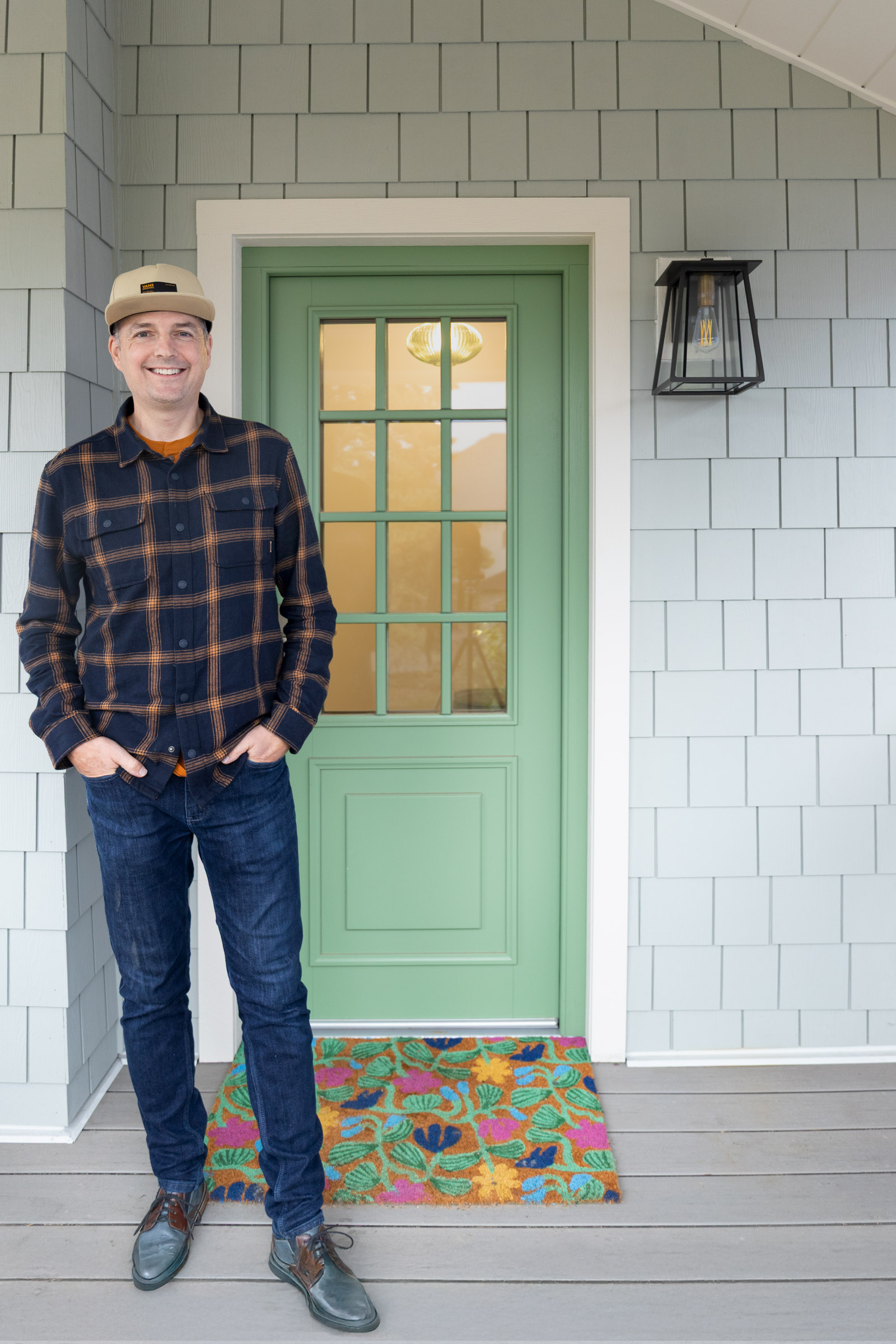
Todd Talbot is a Canadian television host and builder best known as the co-host of HGTV Love It or List It Vancouver—a renovation series built around real constraints and real decisions. More recently, he’s documented high-performance building through Todd Talbot Builds: The Passive House Project on Cottage Life.
CRAFT first worked with Todd during his Love It or List It Vancouver years, supplying wood floors for multiple renovations. This time, the conversation is off-camera and personal: Todd and Rebecca’s own East Vancouver home, rebuilt slowly and deliberately with the long view in mind.
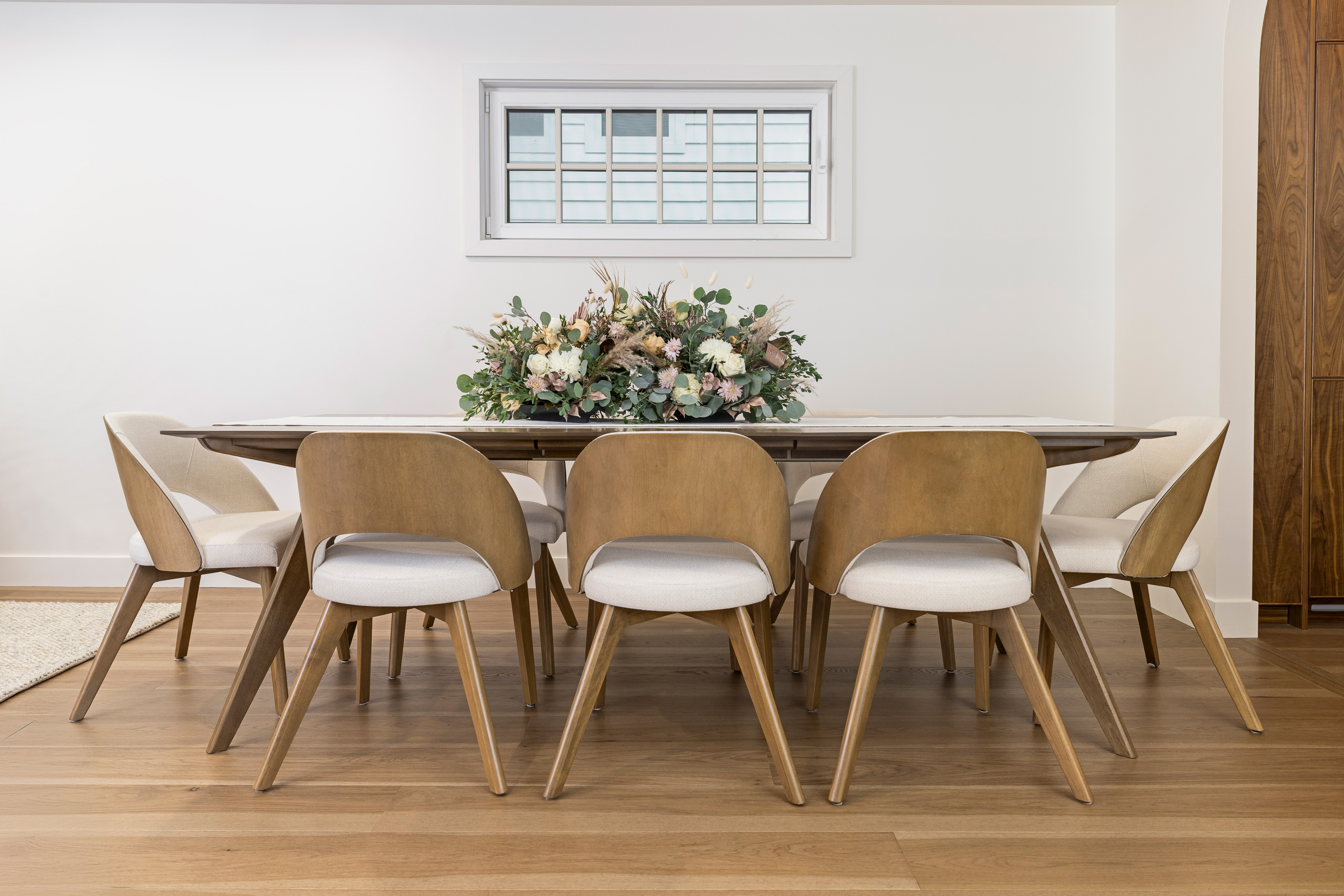
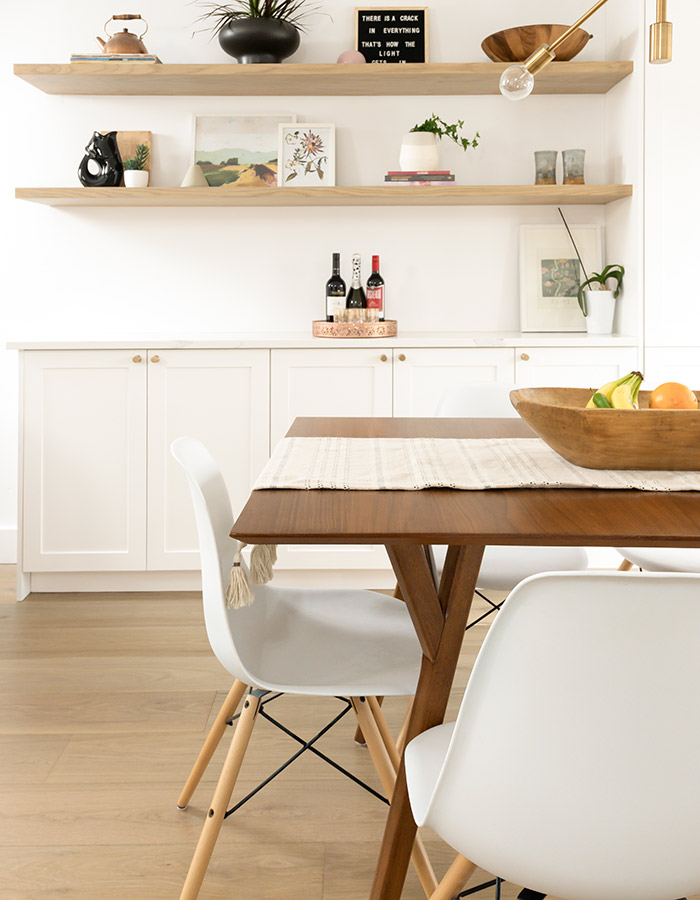
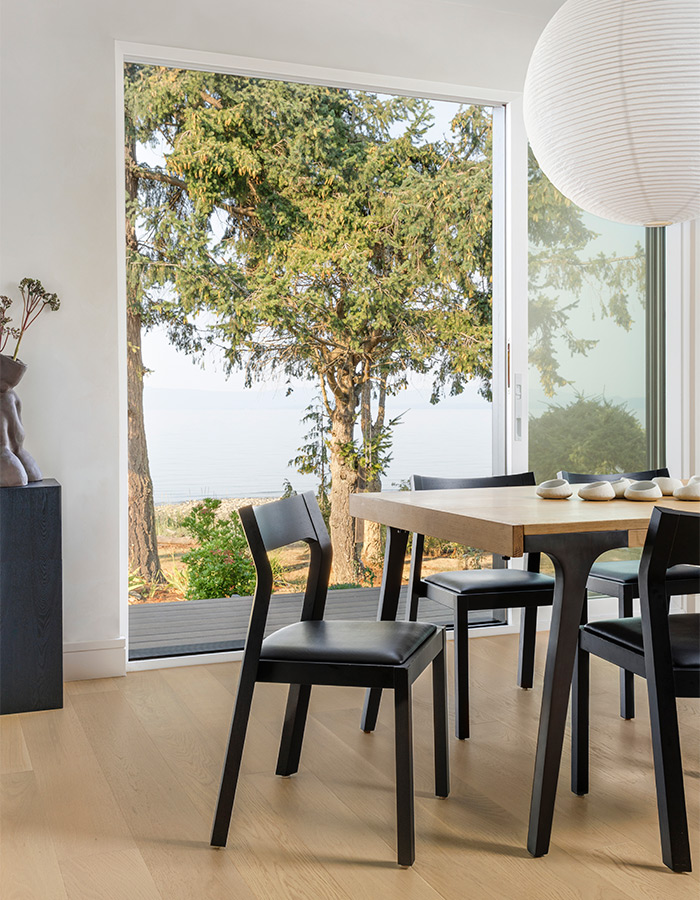
Todd and Rebecca welcomed CRAFT in at the dining table, a solid presence at the centre of daily life. Todd is particular about that kind of anchor.
T: I love the dining table. It feels like a grown-up table where you can actually sit. Everyone feels comfortable. I’m very particular—we’ve had a lot of different tables. I wanted something big and solid where people could sit, so sometimes I just come and sit here. Just be. I can just sit at this table.
Sitting down for a meal is a challenge for this family. We don’t love to cook and we’re a little all over the map. But this space has helped us actually sit down together—and we’ve tried to do that.
Behind the scenes: Todd and Rebecca met through musical theatre. The idea of a “production” still fits this build—clear direction up front, then hundreds of small decisions that have to work together every day.
CRAFT: If this house were a production, what one-line direction did you and Rebecca give it from day one?
T+R: From day one we were always looking for what is going to make this work for the family. We let our kids dictate their spaces as well, with some oversight. Having them have their own rooms, and creating spaces where they could be with their friends—especially downstairs—that was a driving force, especially around the downstairs area.
We also wanted to do something differently from a design aesthetic than what we had done before. I remember having those early conversations about embracing what this house was and trying to give it a little bit of a spin.
CRAFT: Once you had that direction, what were the non-negotiables you and Rebecca agreed on early?
T: I’m committed to high performance and so that was a non-negotiable in terms of how we approached the construction philosophy.
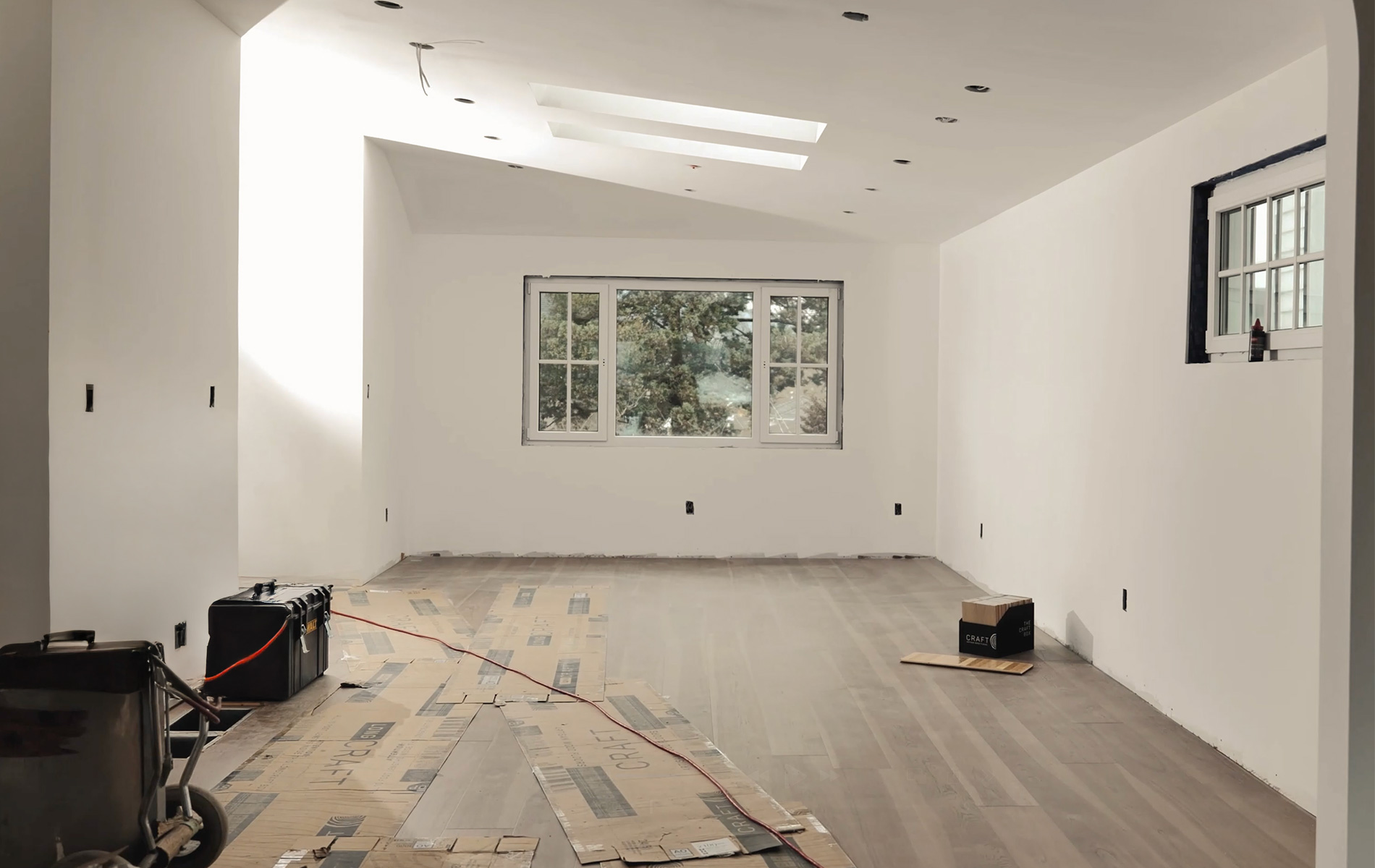
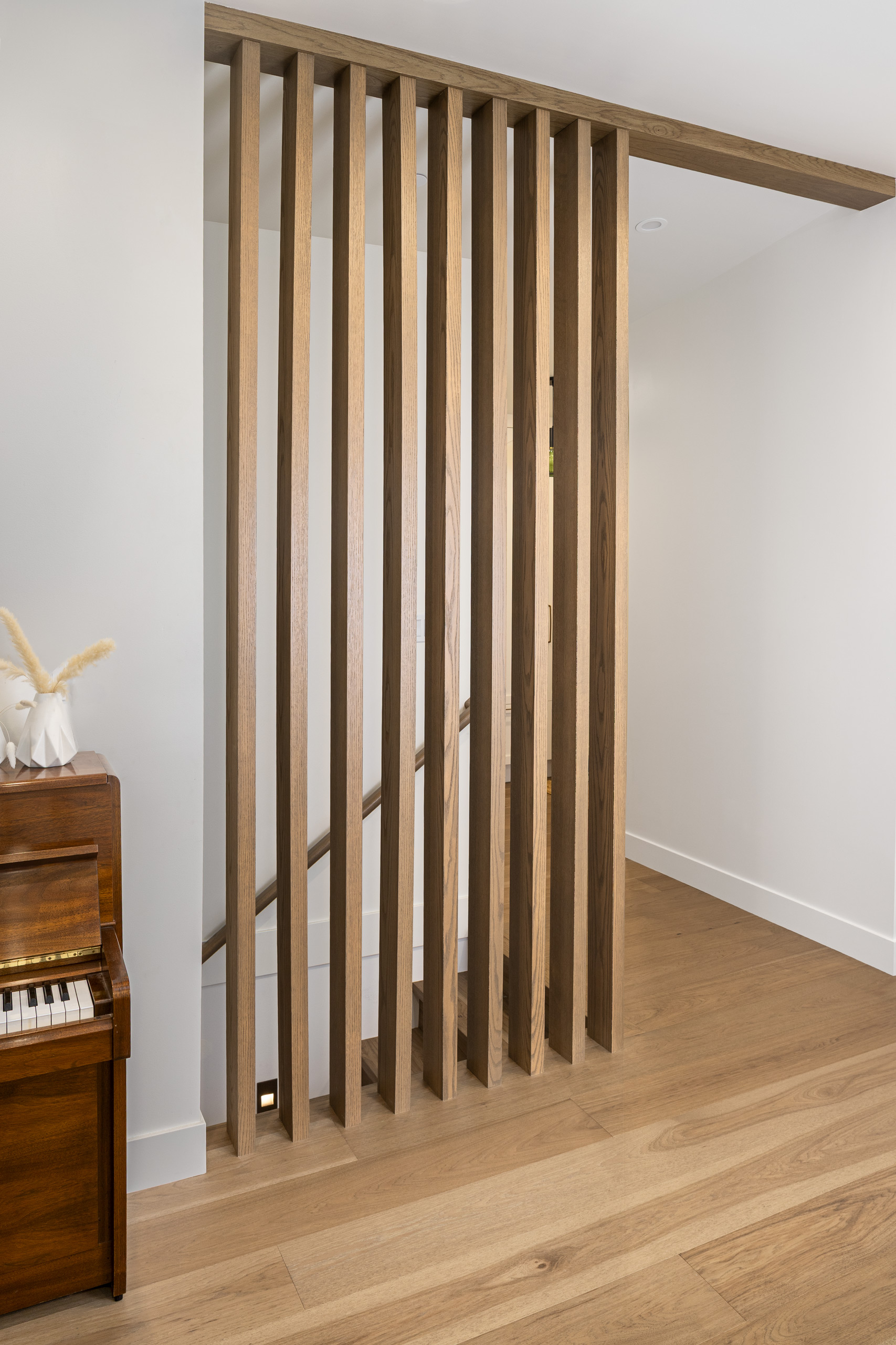
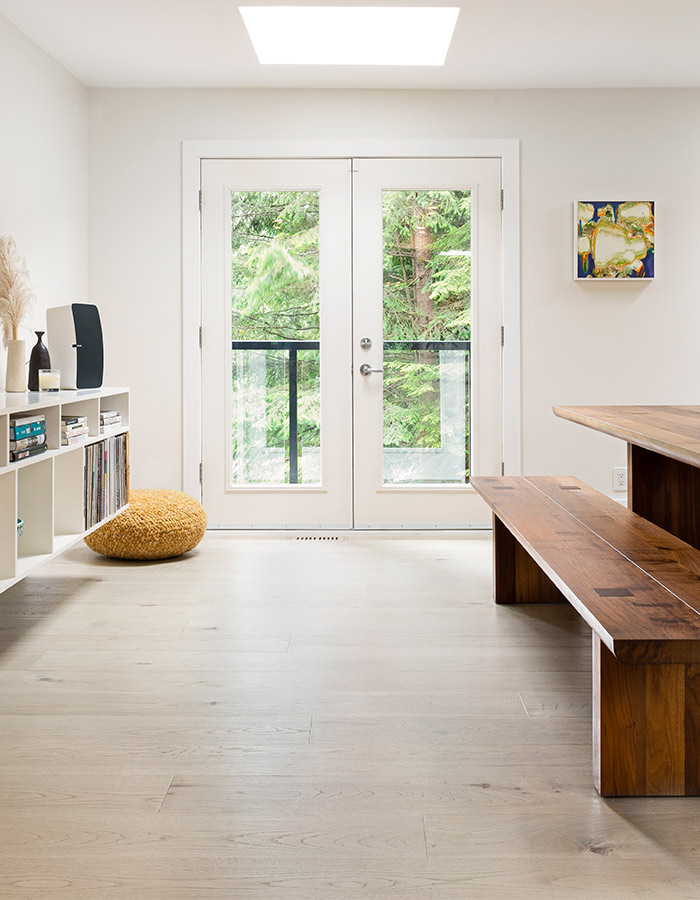
One of the challenges in Vancouver is you can’t add side windows, so we looked for light from above—two skylights here, one over the staircase, and one in the primary. It worked really well.
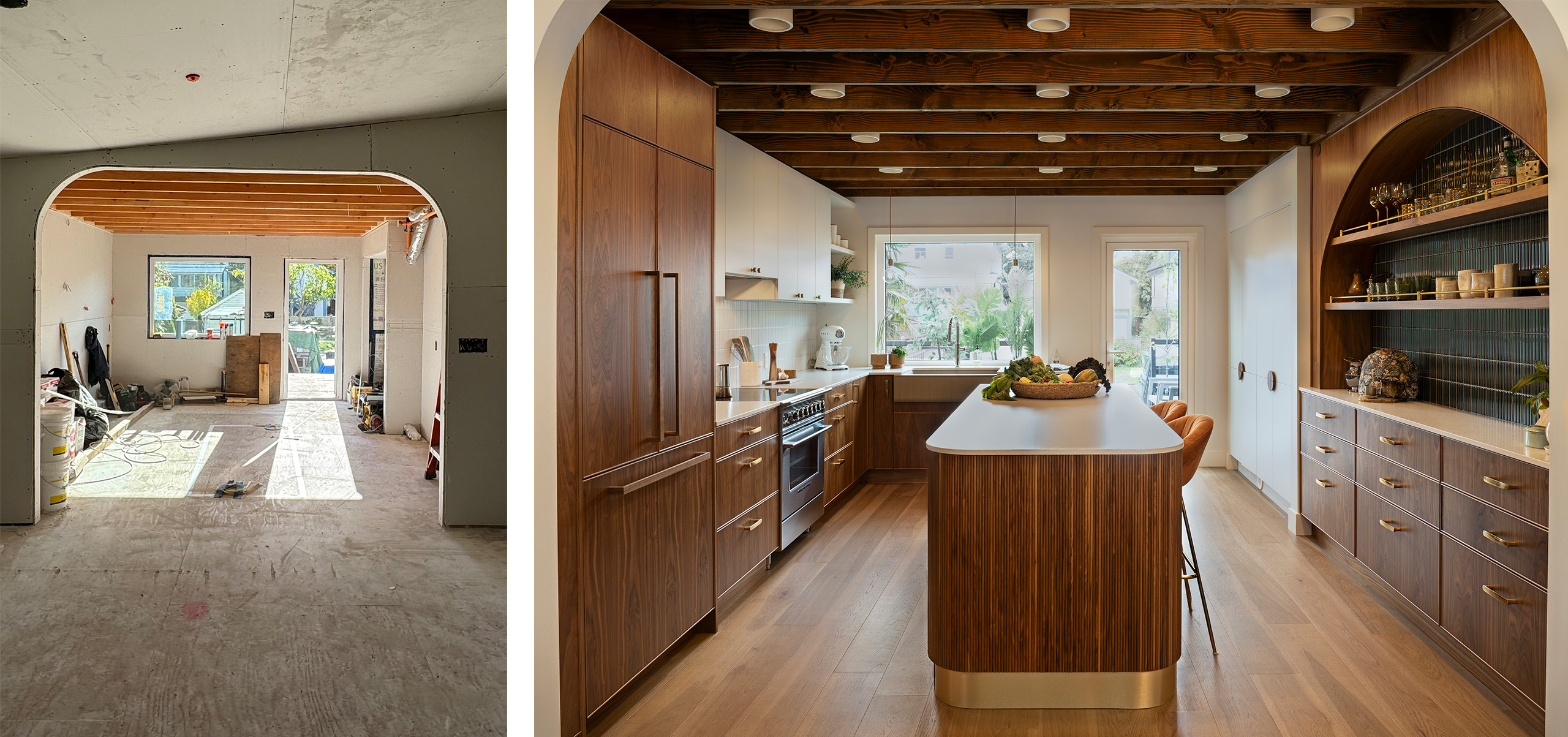
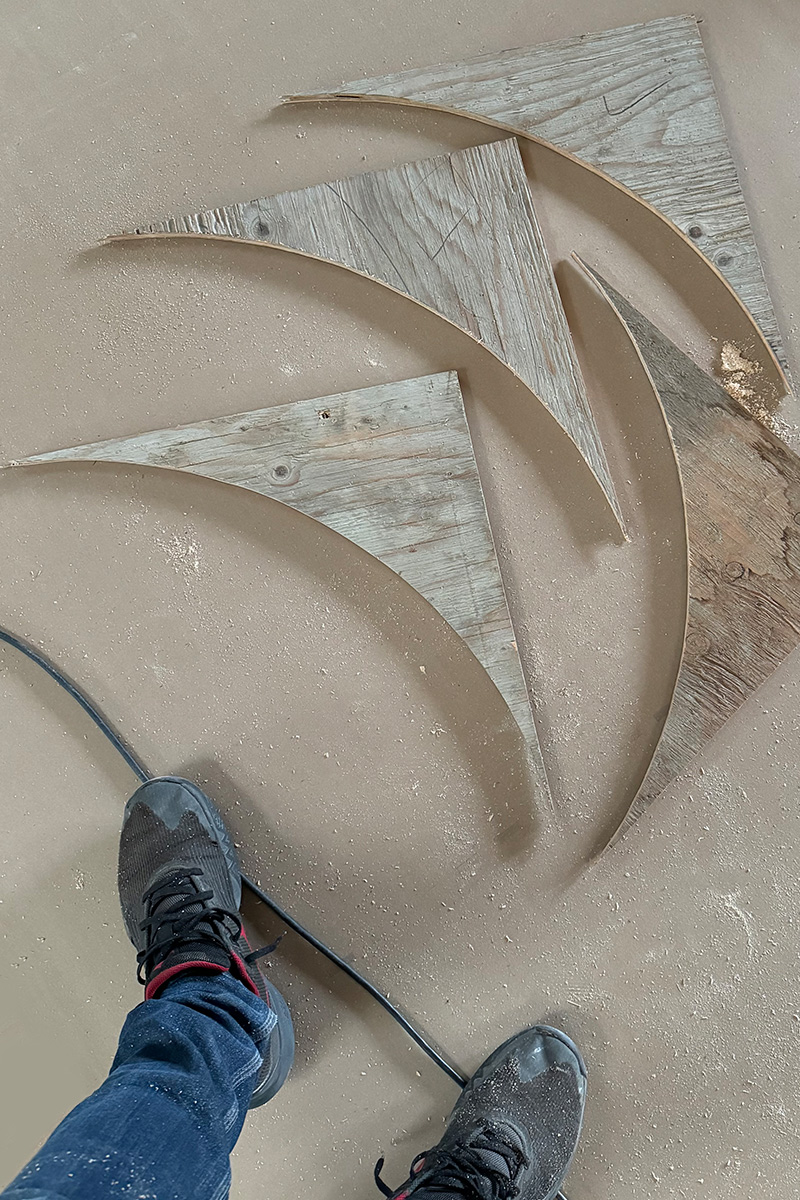
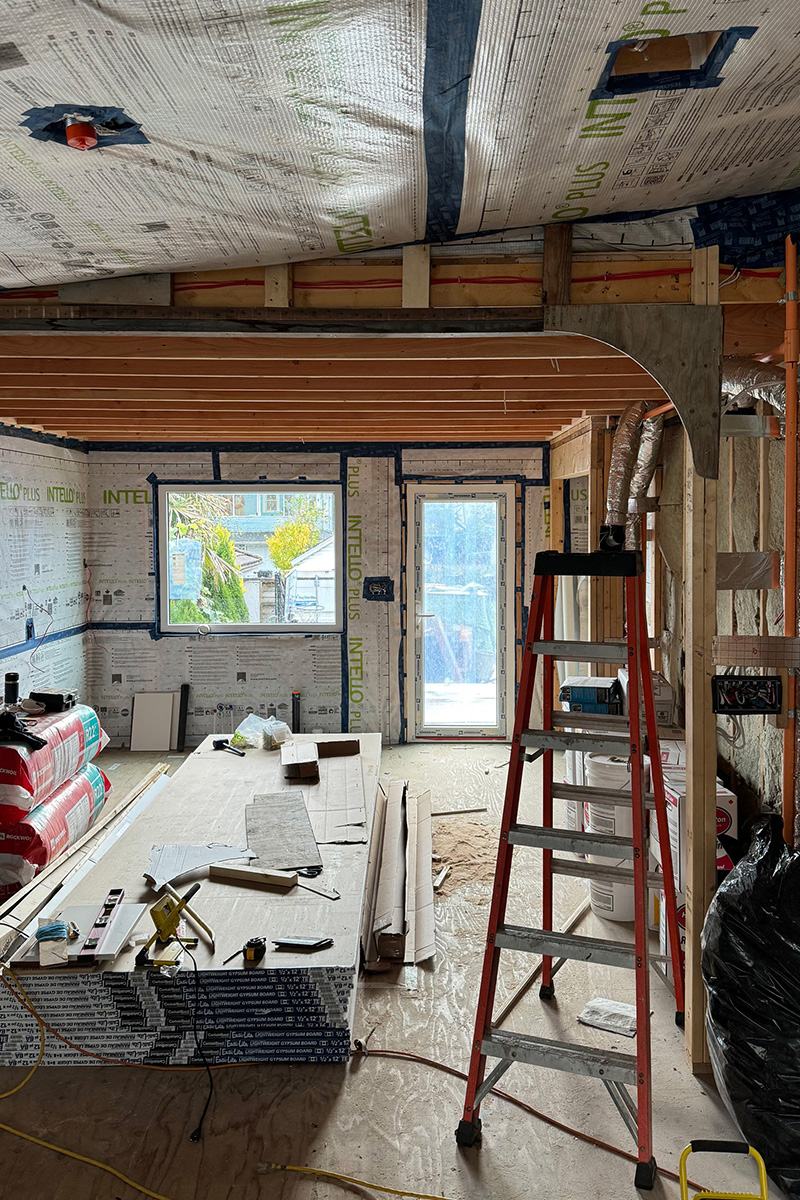
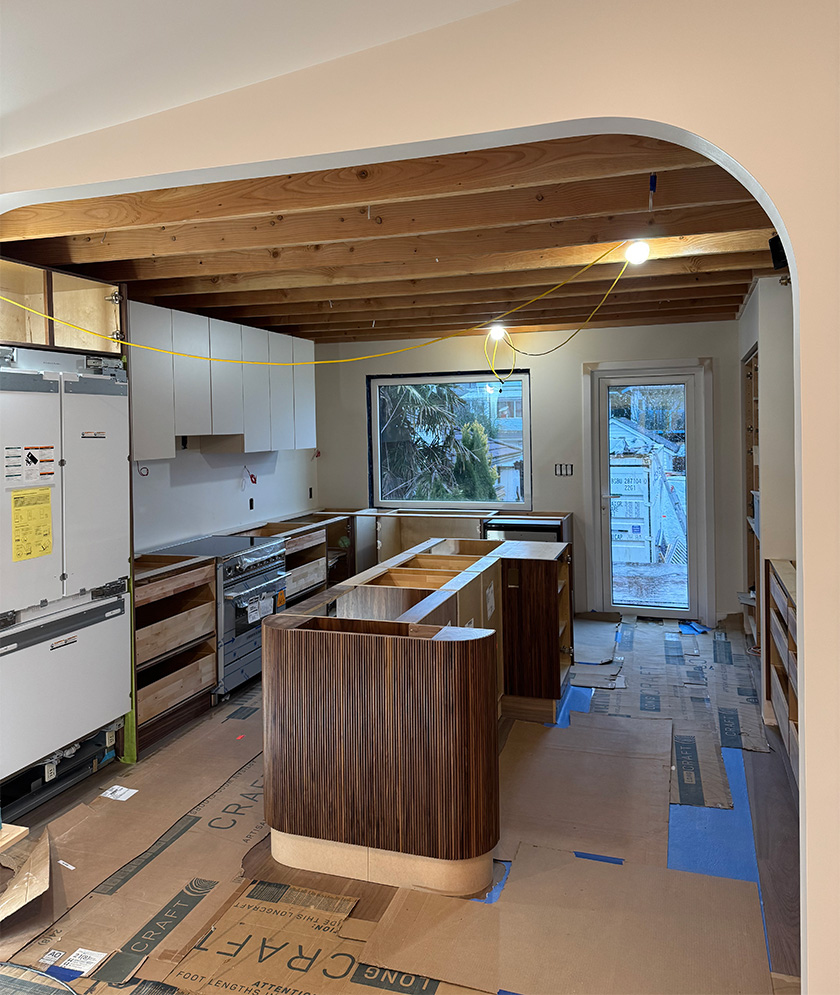
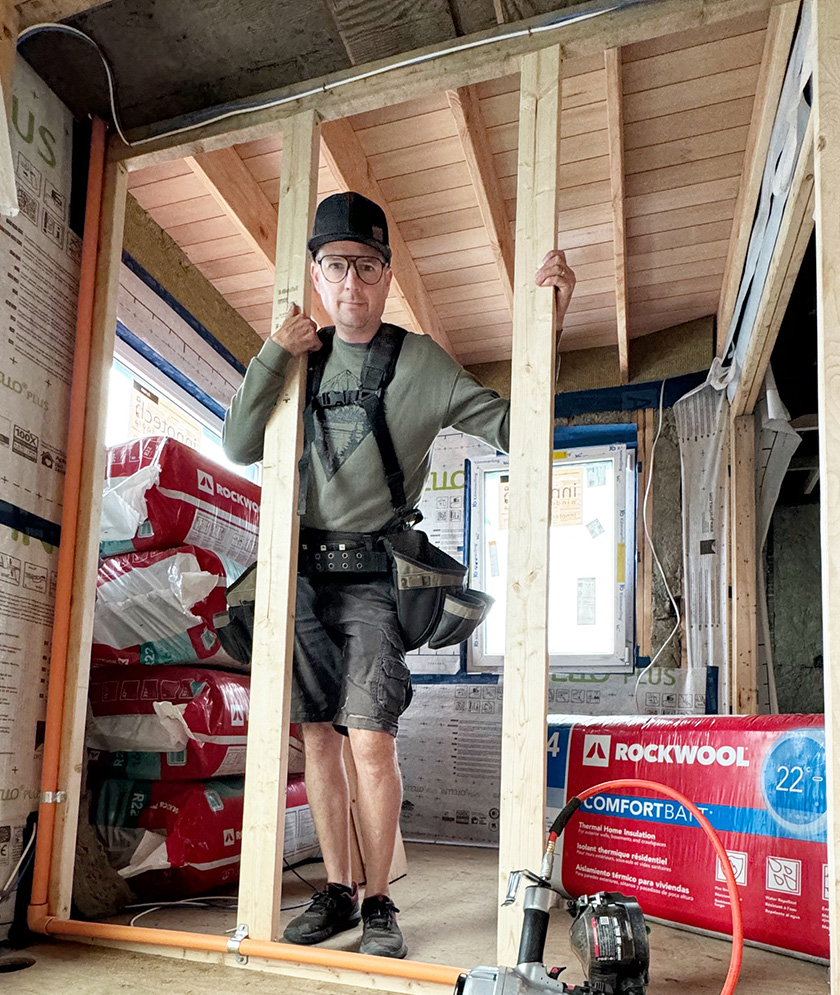
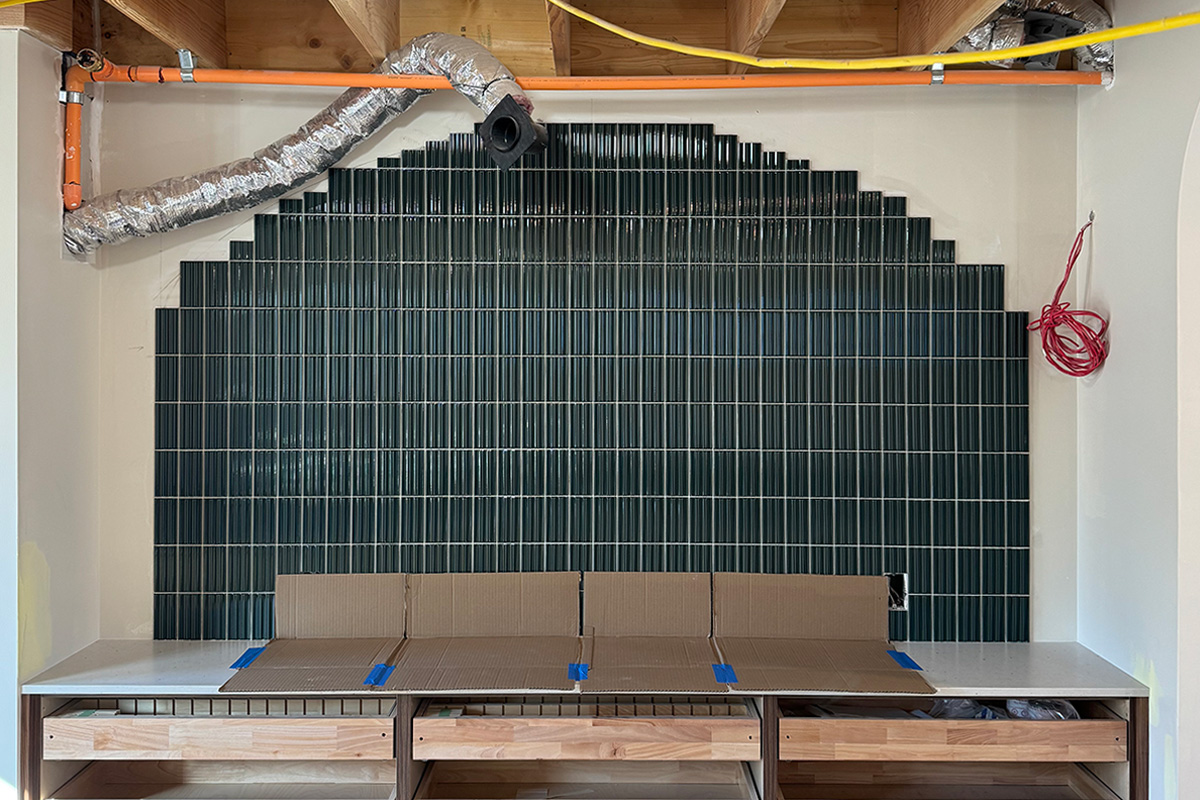
Mid-build glimpses: the kitchen volume taking shape, and the arch zone before finishes. These are the kinds of decisions that determine proportion, clearance, and how the room feels to move through.
T: The biggest change we made was the roofline. I took out all of the rafters and framed up this centre wall another 18 inches, and then I put all the rafters back in — so we got this vault. I wanted to save the roof line. If we’re going to lift it and then rip off the roof as well, you start asking: what’s the point of saving any of it? That vault changed everything about how this room feels.


T: We wanted to acknowledge the style of the house, not try and make it into something we don’t love. You see that a lot around the city—when people take a Vancouver Special that is clearly one thing and try to make it something else. You get a square peg in a round hole.

With the direction set, the next decision was scale—how much house to build, and where to put the volume.
Q: What did “right-sized” mean in practice?
T: Height of ceilings is always really important to us — not necessarily massive square footage. We didn’t max out the square footage. We tried to design for the usability of the space and let that dictate the square footage. We could have gone bigger… but we’re at 0.65. We could have made this larger if we wanted to, but we feel it’s the Goldilocks principle — finding the right space for this family, as opposed to building it for some other reason.
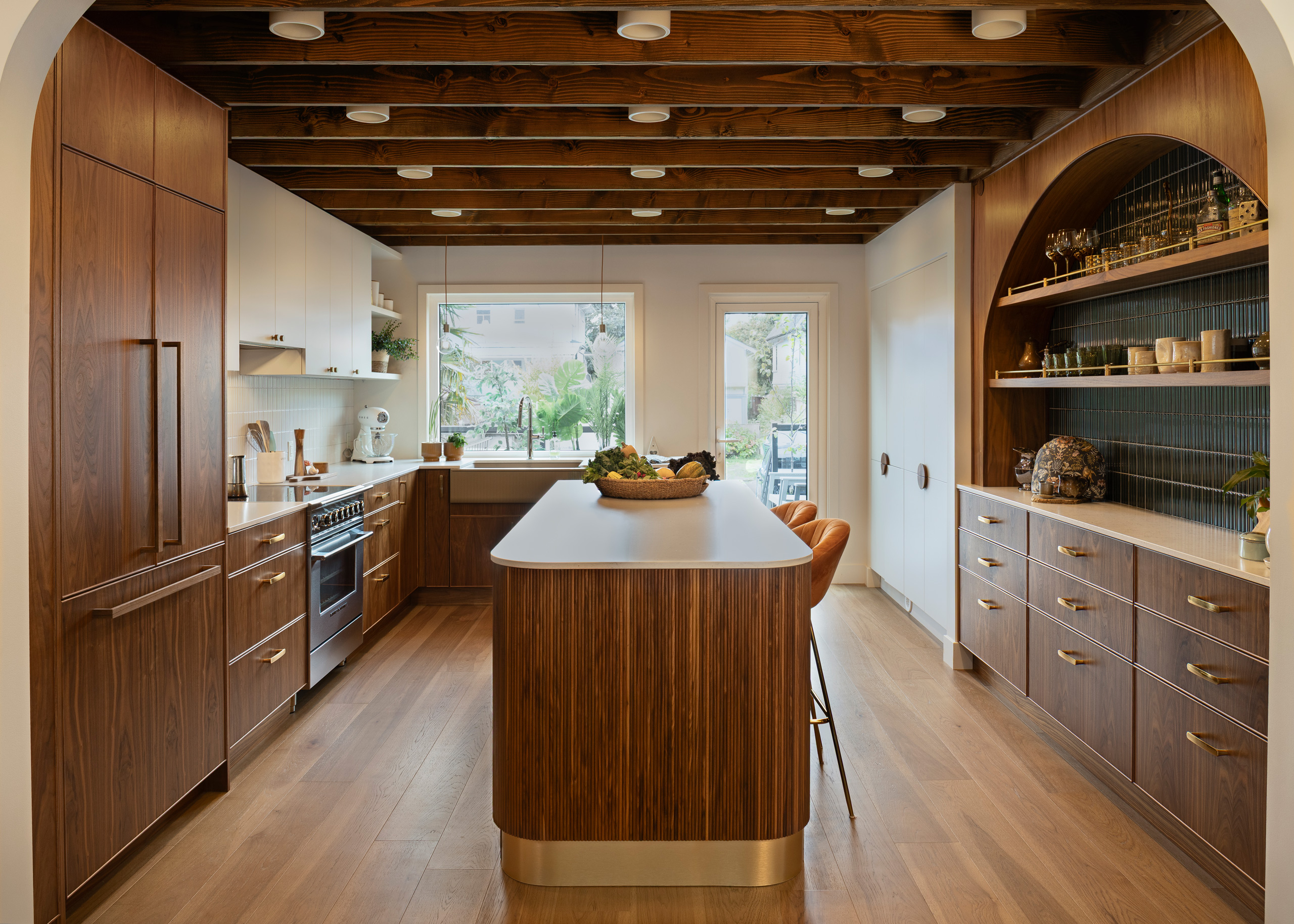
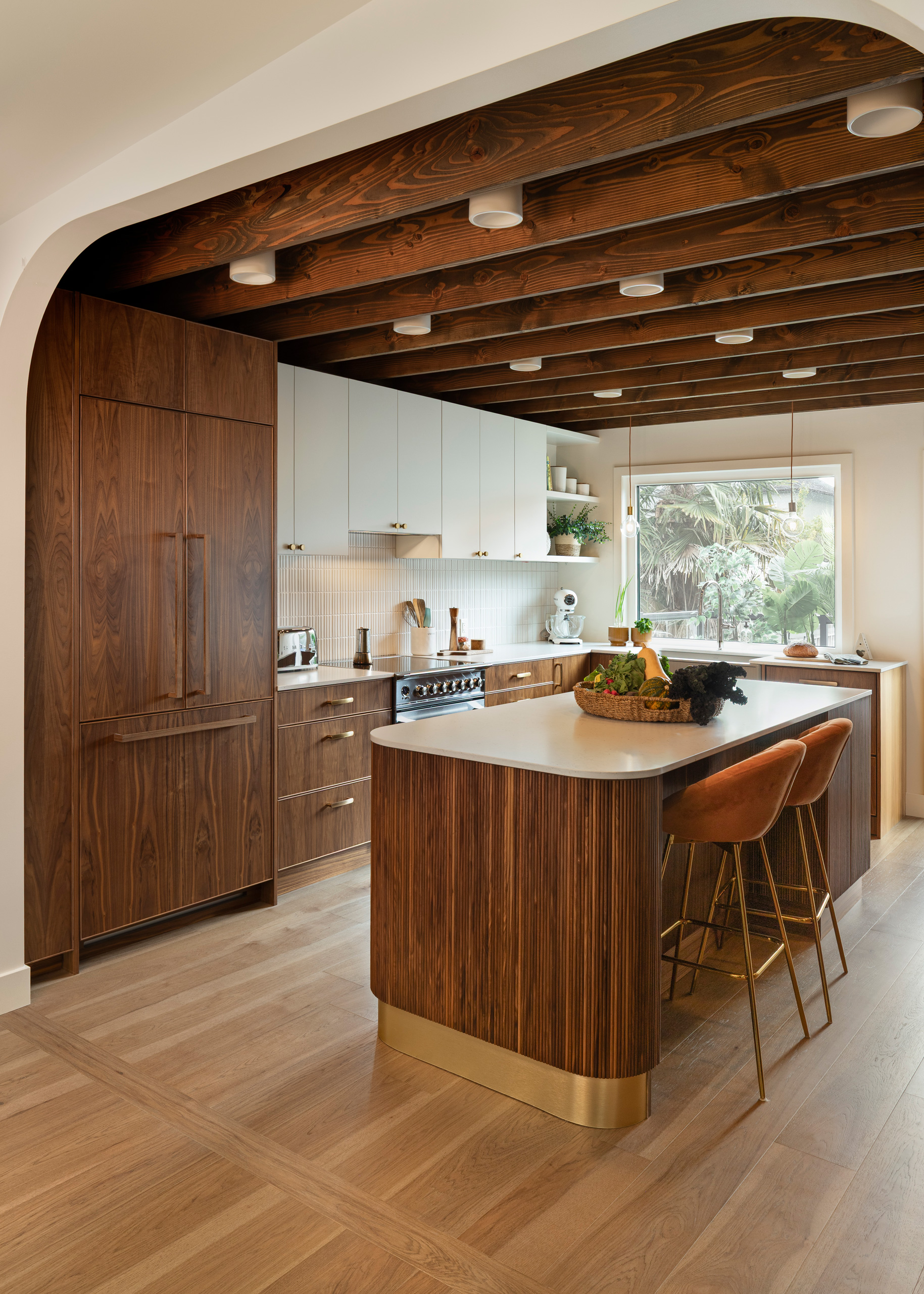
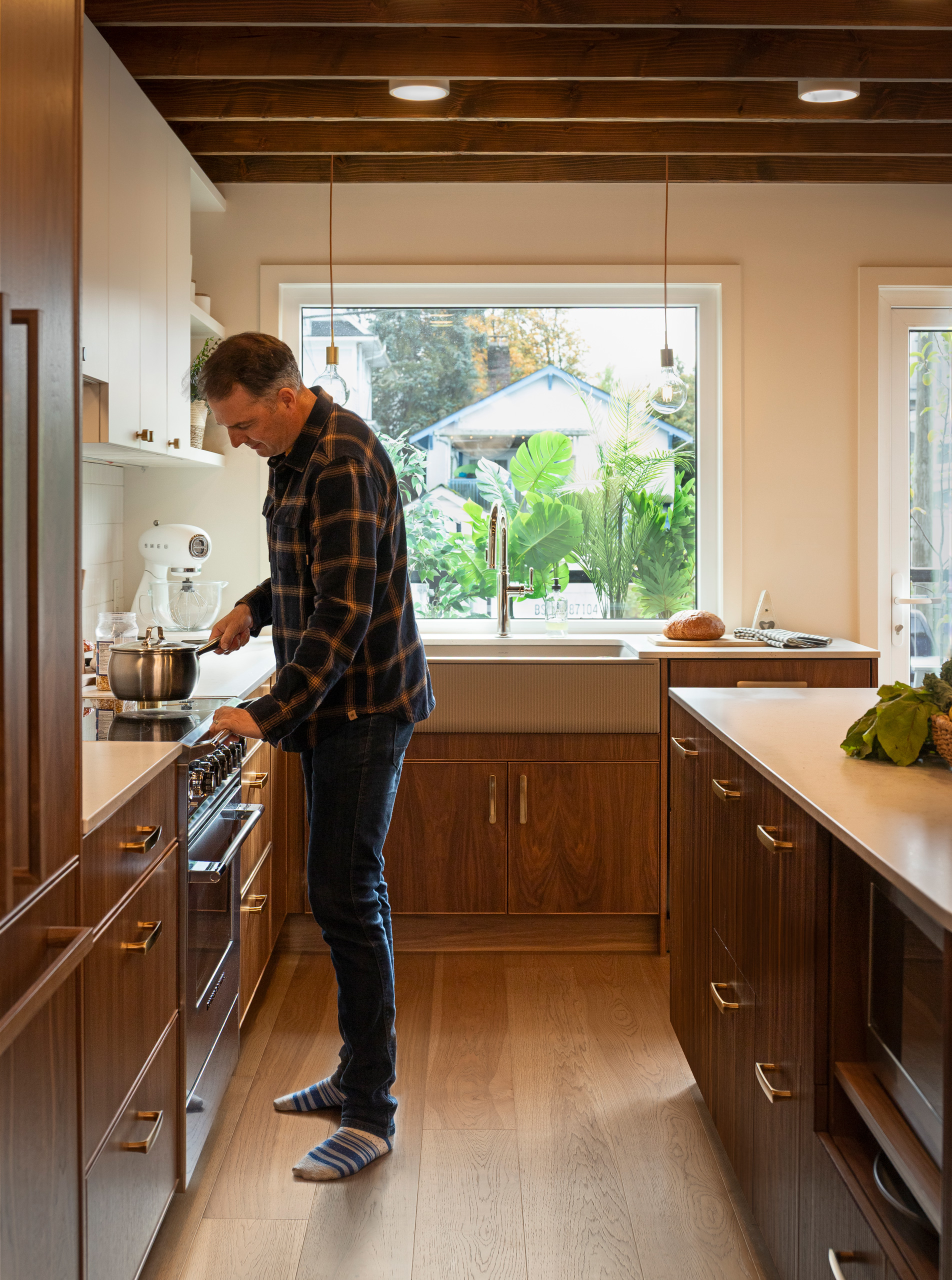
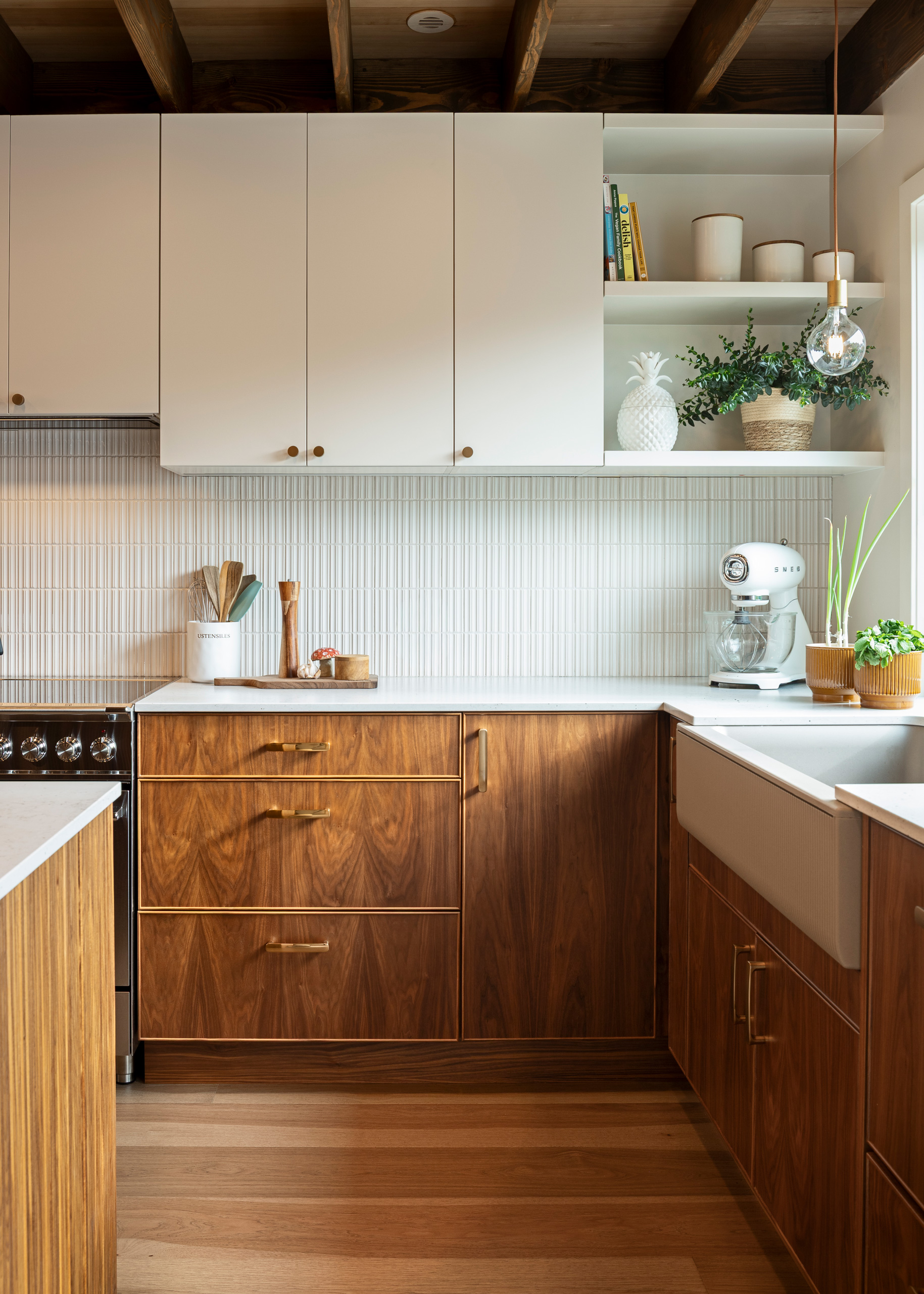
The kitchen is where the Talbots allowed the most visual energy—still controlled, still purposeful.
The island is used the way it was designed: a work surface, a gathering point, and the place people drift toward while food is happening.
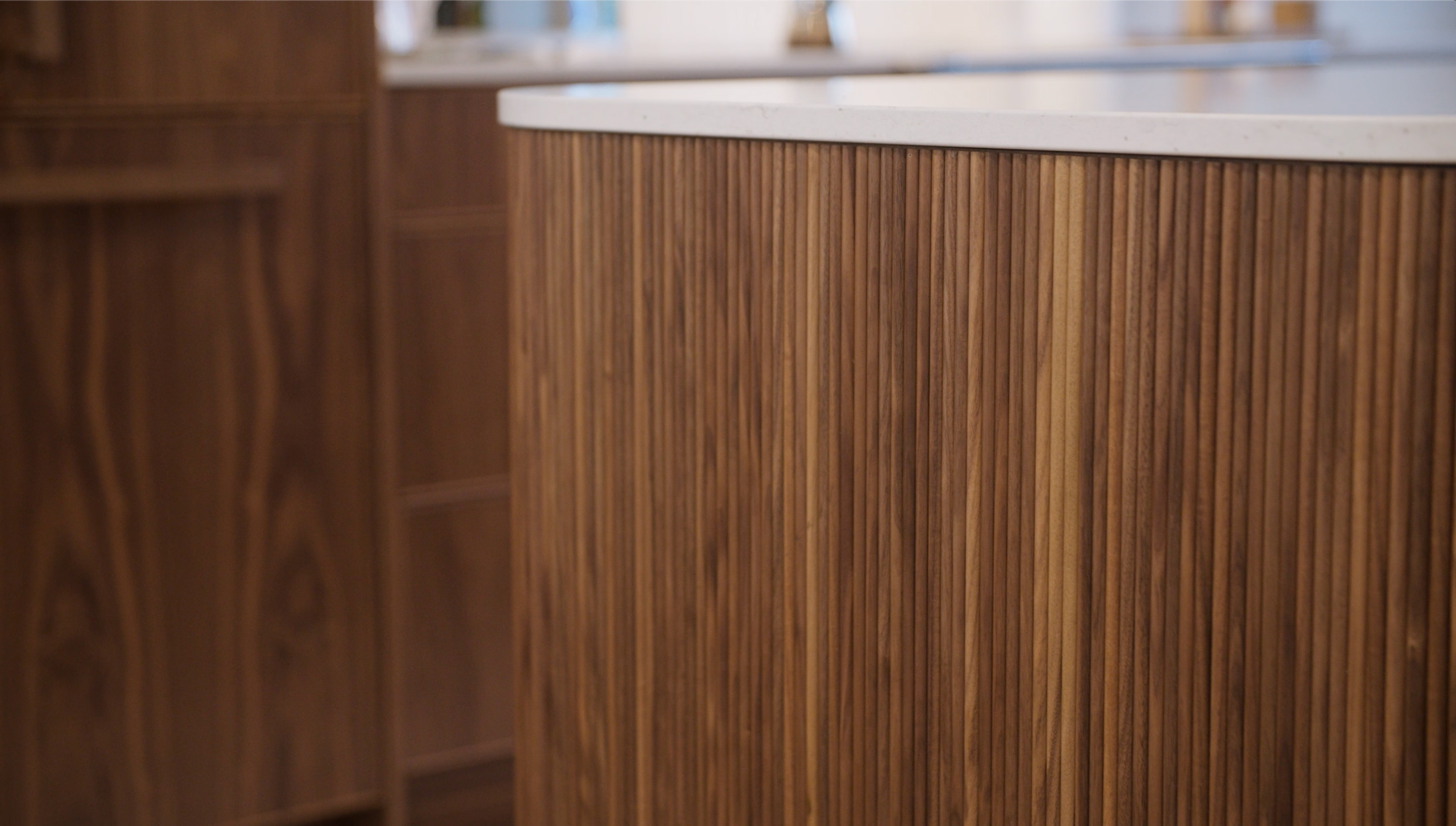
T: We wanted the island to feel like a piece of furniture. It’s got drawers on both sides. We kept everything really simple—no handles—just little finger pulls. And the top’s big enough that you can spread out, but it still feels clean.
CRAFT: When you’re choosing elements that will stay for decades, where do you focus your attention?
T: The stylings can be changed quite easily and economically, but the hard finishes are the ones that need the most time and thought—any of the surfaces: the flooring, the countertops, the millwork. Those pieces get installed, built in, and feel like an actual part of the home.
CRAFT: Why Arezzo Hickory for this house?
T: We narrowed it down to three or four different flooring samples and brought them back into the space. This one kept coming back to us. It’s warm and natural. It has the hickory personality—the different wood patterns and occasional knots. The lighter sapwood and darker heartwood, that organic linear pattern, really spoke to us. It helps in the everyday living of the space. It’s nice to think everything is always kept perfect, but this is a busy family home. Things get messy, and I think it masks a lot of that.
Todd also points to something that’s harder to quantify, but easy to recognize once it’s in front of you:
T: This floor feels calming. I think a lot of times, for design choices—if they’re something hard to articulate—that’s when there’s a bit of a feeling involved in it too.
In the Talbot home, that calm shows up in the floor’s long sapwood-to-heartwood lines, moving room to room with quiet energy. It’s composed and architectural, but still alive—natural variation that softens the home’s crisp geometry. Arezzo carries the “art” without clutter: a restrained nod to the Talbots’ creativity, and a durable surface built for daily life.

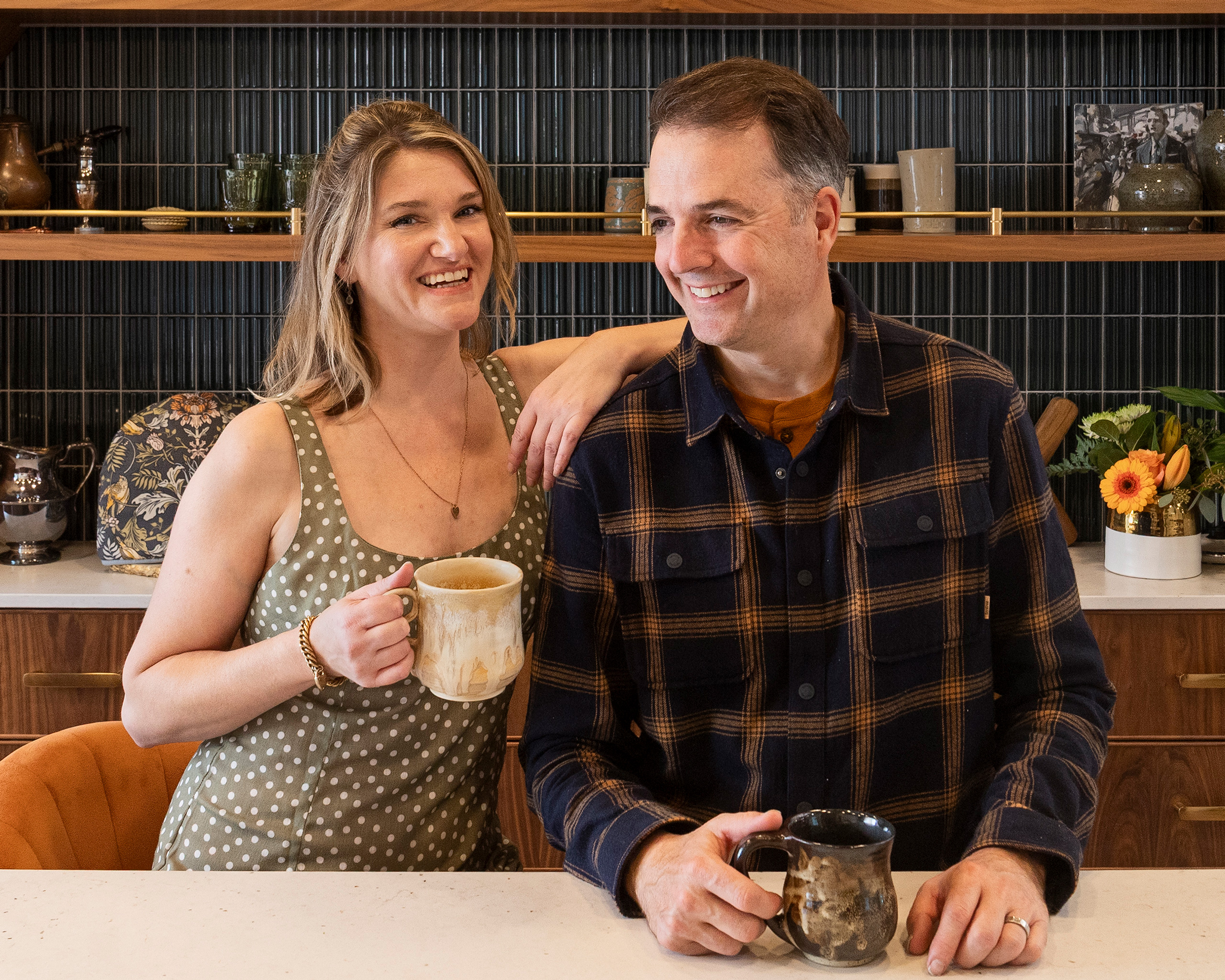
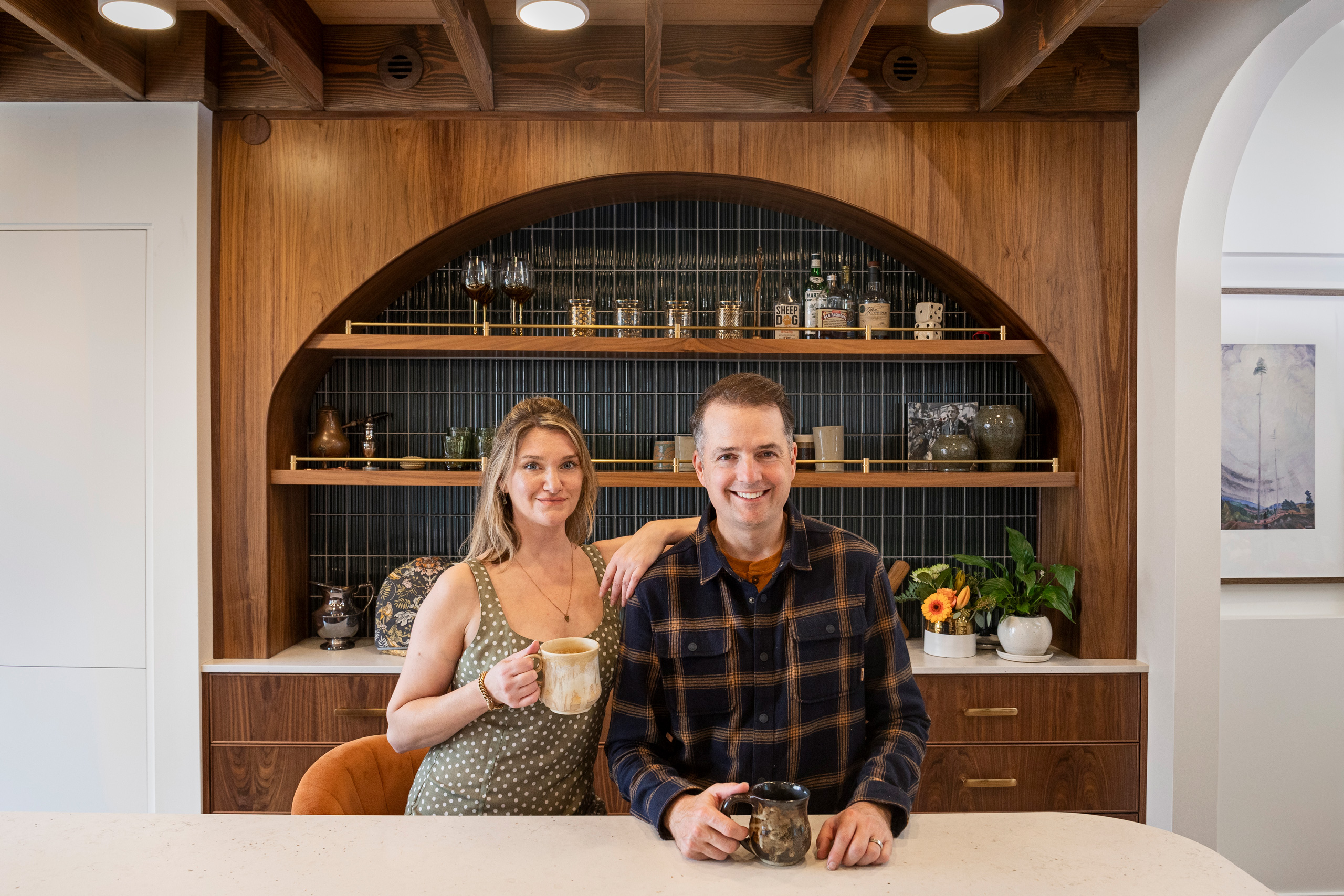
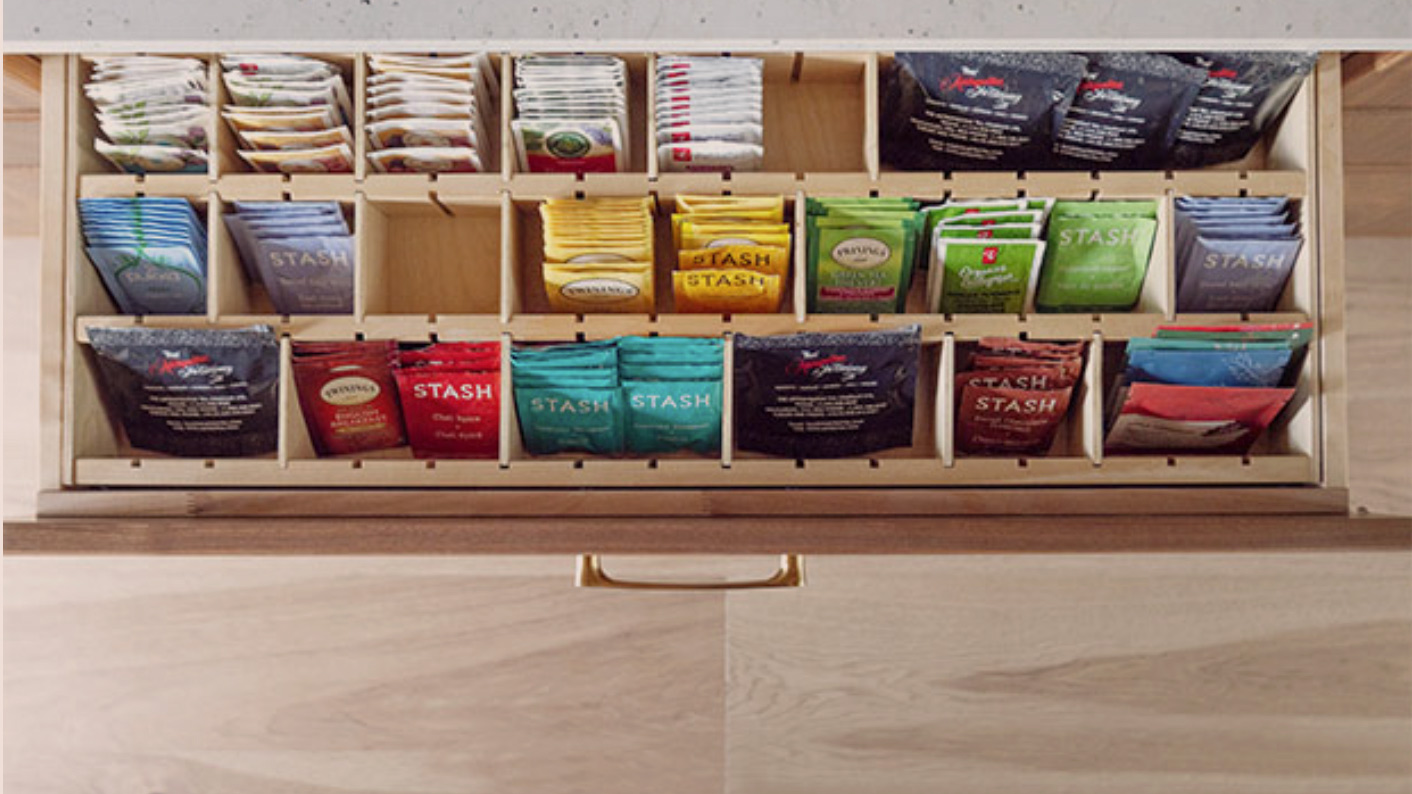
Todd and Rebecca Talbot in the kitchen they built for real life— tea & coffee, conversation, and enough room for people to gather while food is happening. Behind them, the walnut arch keeps the wall organized and warm: part feature, part function.
T+R: When we first moved in, the kids wanted to invite friends over right away. They had a whack of kids downstairs and we looked at each other like—this was the intention.
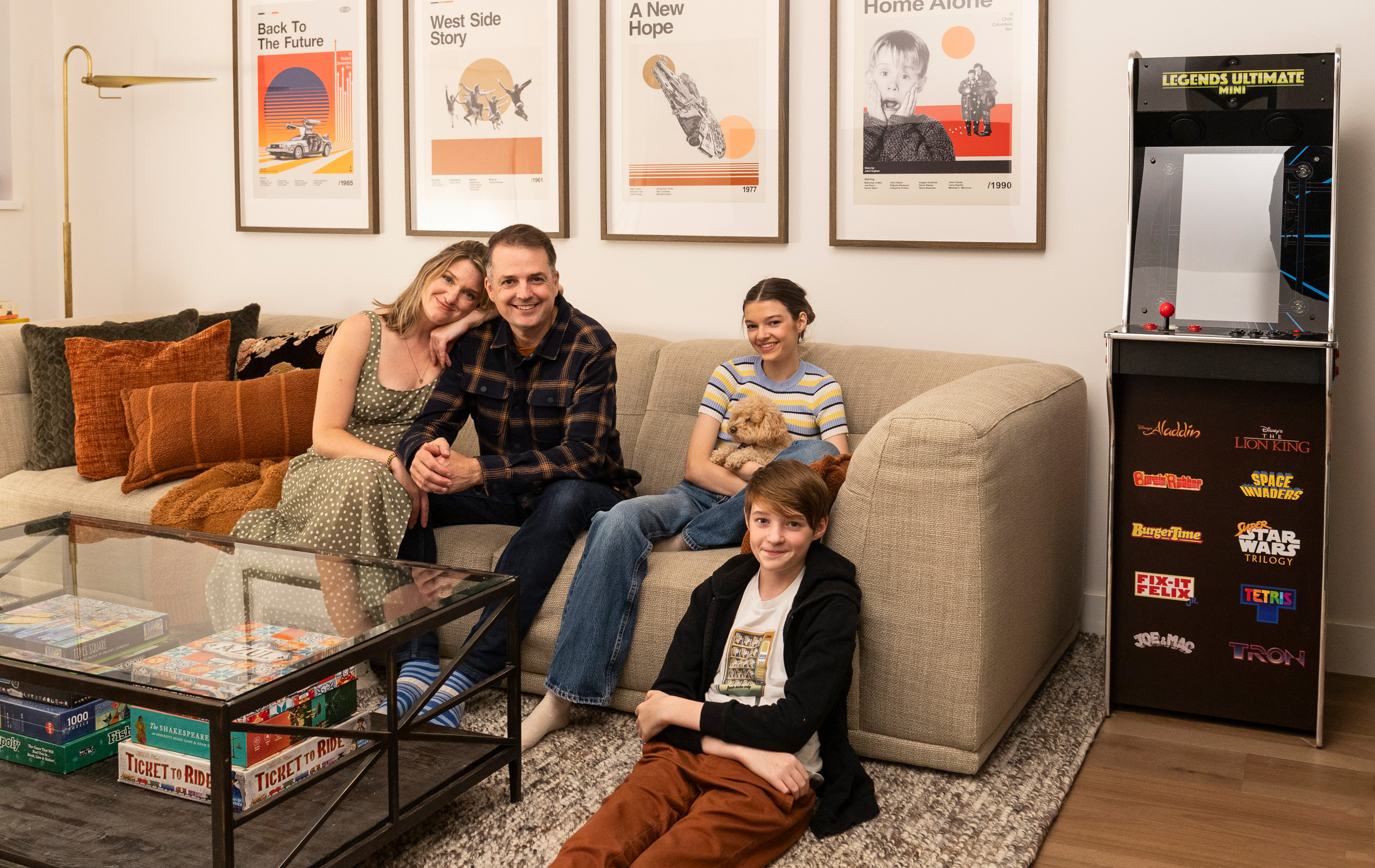
T: We wanted the ‘if you build it, they will come’ idea. It actually worked, we didn’t even have to set it up and facilitate it. We just created this space that built that in. So I think that that was the moment that we felt – this this feels good, the kids are being social and it just warms your heart a little bit. Not to be too sentimental about it – I’m not crying yet. If we talk about our kids too long I probably will.
Invoking the senses:
T: I never quite know how to articulate this, but this time around I feel we were a little more bold than we would normally be, a little more adventurous maybe. Less concerned about what other people think and just trusted what we thought would be.
Radiused millwork design lineage:
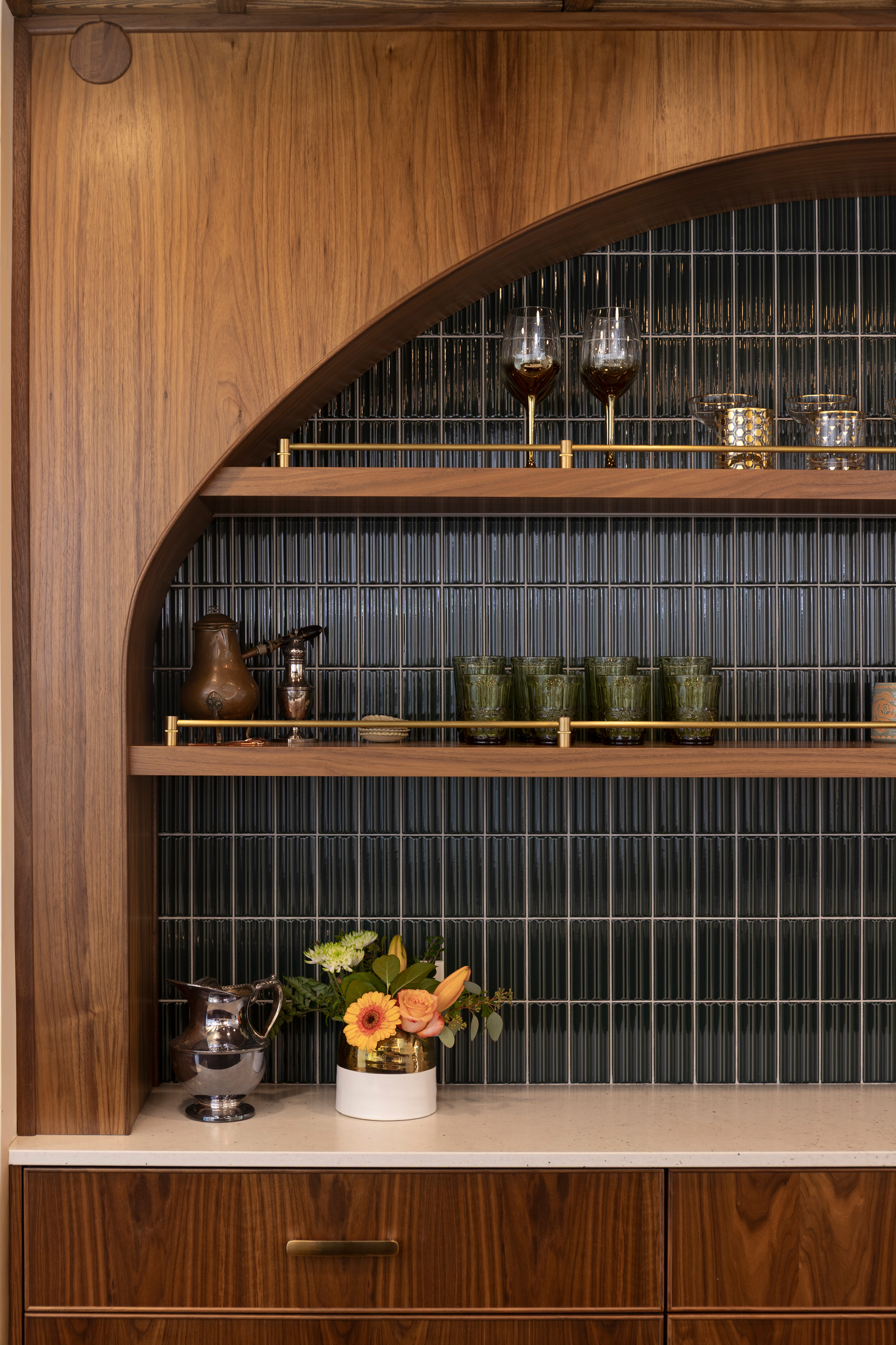
The segmental arch is an old motif—used for centuries to frame a focal zone with a softer edge. Here it’s executed in walnut, with deep turquoise vertical “finger” tile (a mid-century and Japanese mosaic descendant) adding gloss and rhythm inside the curve.
In the primary, the pace drops. Arezzo continues underfoot, keeping the home’s material language natural.

The retrofit was made with a few sensory cues in mind:
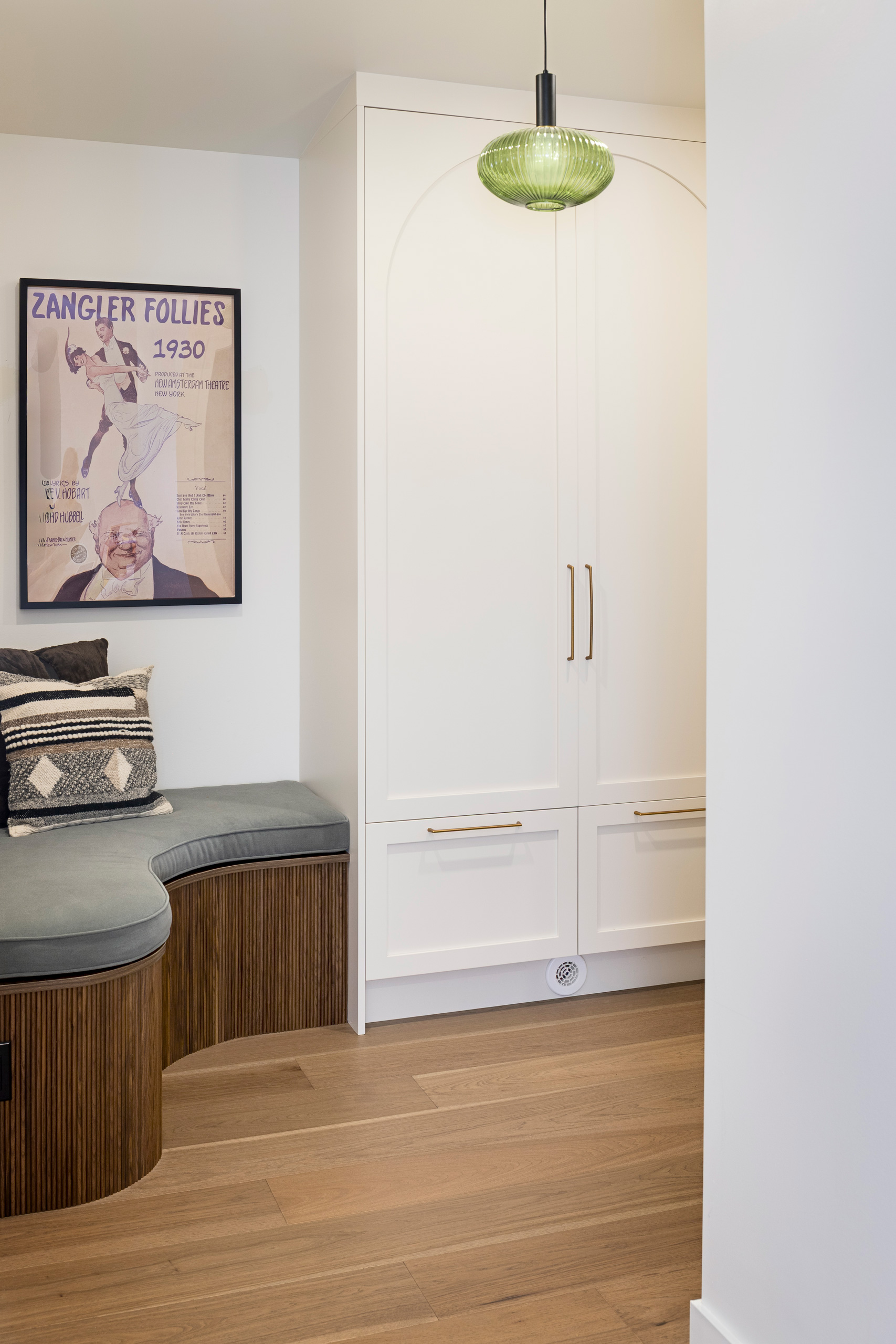
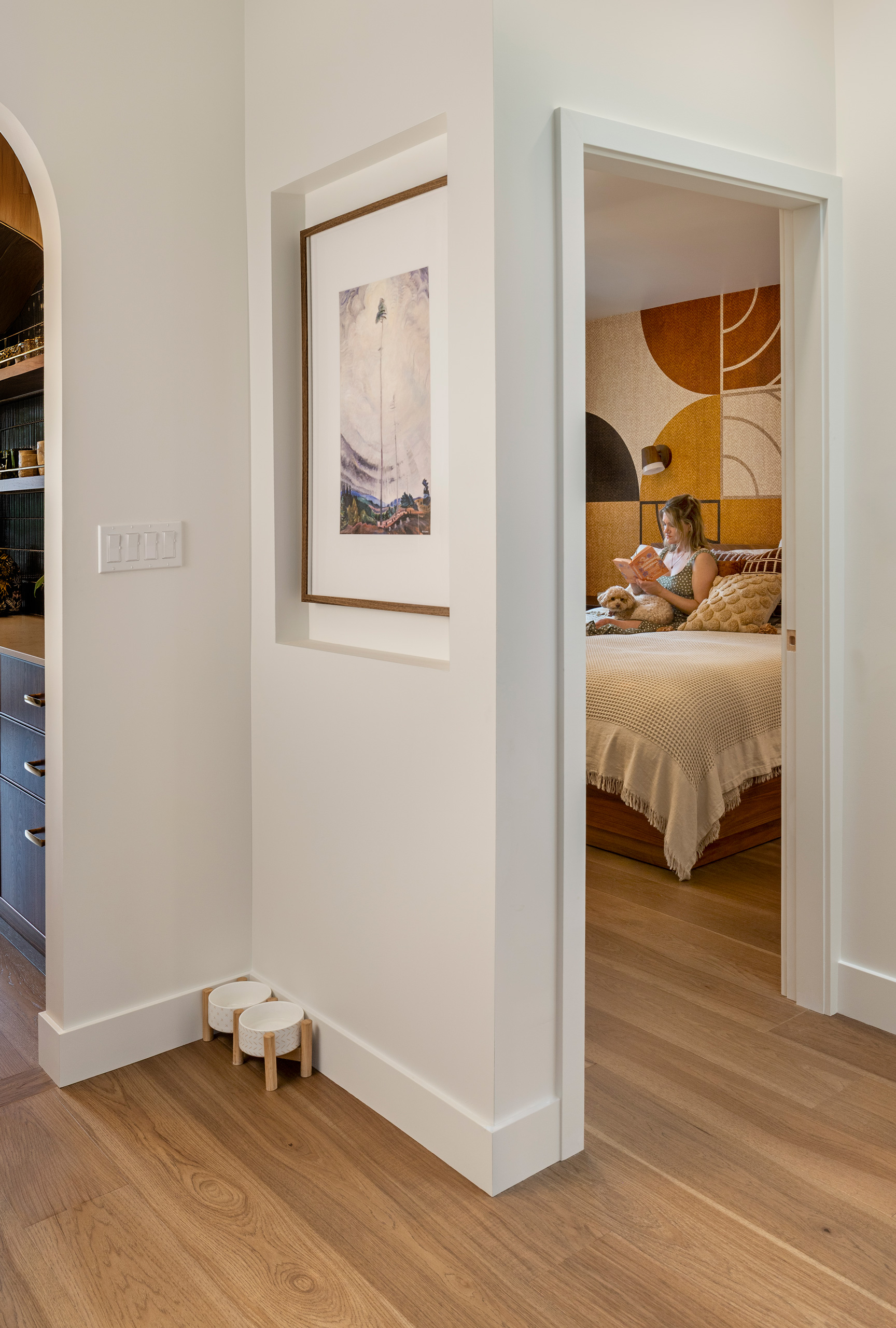
Sight: Vaulted volume, warm wood tones, and playful movie & musical posters.
Touch: Lightly wire-brushed wood planks underfoot, and natural millwork at hand.
Air: Filtered fresh air cycles through, clean, quiet, and consistent.
Sound: A steadier hush—less street noise, softer everyday sounds.
Why Hickory?
Durability: With a Janka rating of 1820, Hickory stands up to busy family life—shoes, bags, sports gear, and daily traffic.
Visual Interest: Light sapwood and deeper heartwood create long, organic lines. Gentle swirl and grain variation keep the overall effect natural and composed.
Everyday Ease: The warmth and movement of hickory’s natural variation, paired with Ultra Matte, helps the floor stay looking good between cleanups.
Q: Why commit to Passive House principles on an owner-led raise + retrofit?
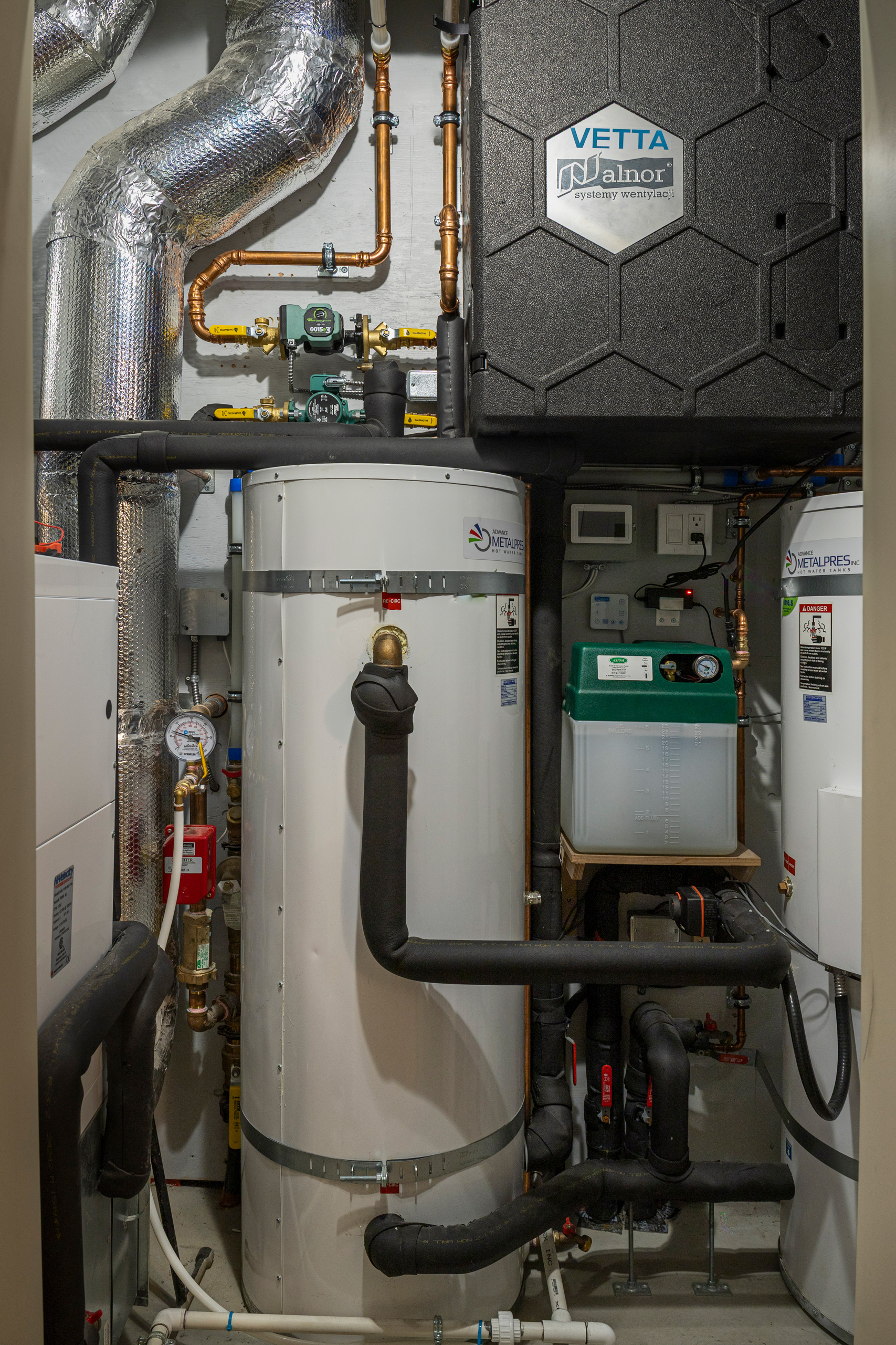
T: I really believe in the high-performance passive principles from a couple of perspectives. One is the functionality of your house—its ability to be extremely quiet, you cannot hear anything from outside. It’s super insulated, which allows a very low demand on your heating and cooling system. Even though we have a very advanced system, it doesn’t take a lot to cool this place down. Comfort—livability is fantastic when you’re as sealed up as we are.

CRAFT: And so once the house is sealed up, air quality becomes a design decision too?
T: (**Edit from Todd needed: so we begin with a first sentence naming his system type eg type of ARV/ERV…) You get to mechanically exchange the air… allowing clean, fresh air. It’s an aspect that I think oftentimes gets overlooked—we move in and take for granted the air is what it is. But it is a way of making sure you have clean, fresh air that’s filtered 24/7, 365 days a year. In circumstances where there’s smoke in the air and particulate and stuff, we can keep our windows closed. It’s climate resilient in a way as well, which is great.
Then on the sustainability side—you look at the craftsmanship that goes into it, the care and attention to detail into the build. The intention is to build something that’s going to last for generations. Which is I think, the way we should be building our homes and spaces — it just isn’t always practiced in this neck of the woods. Also just the operational cost and your carbon footprint is dramatically decreased by following these philosophical and technical principles.
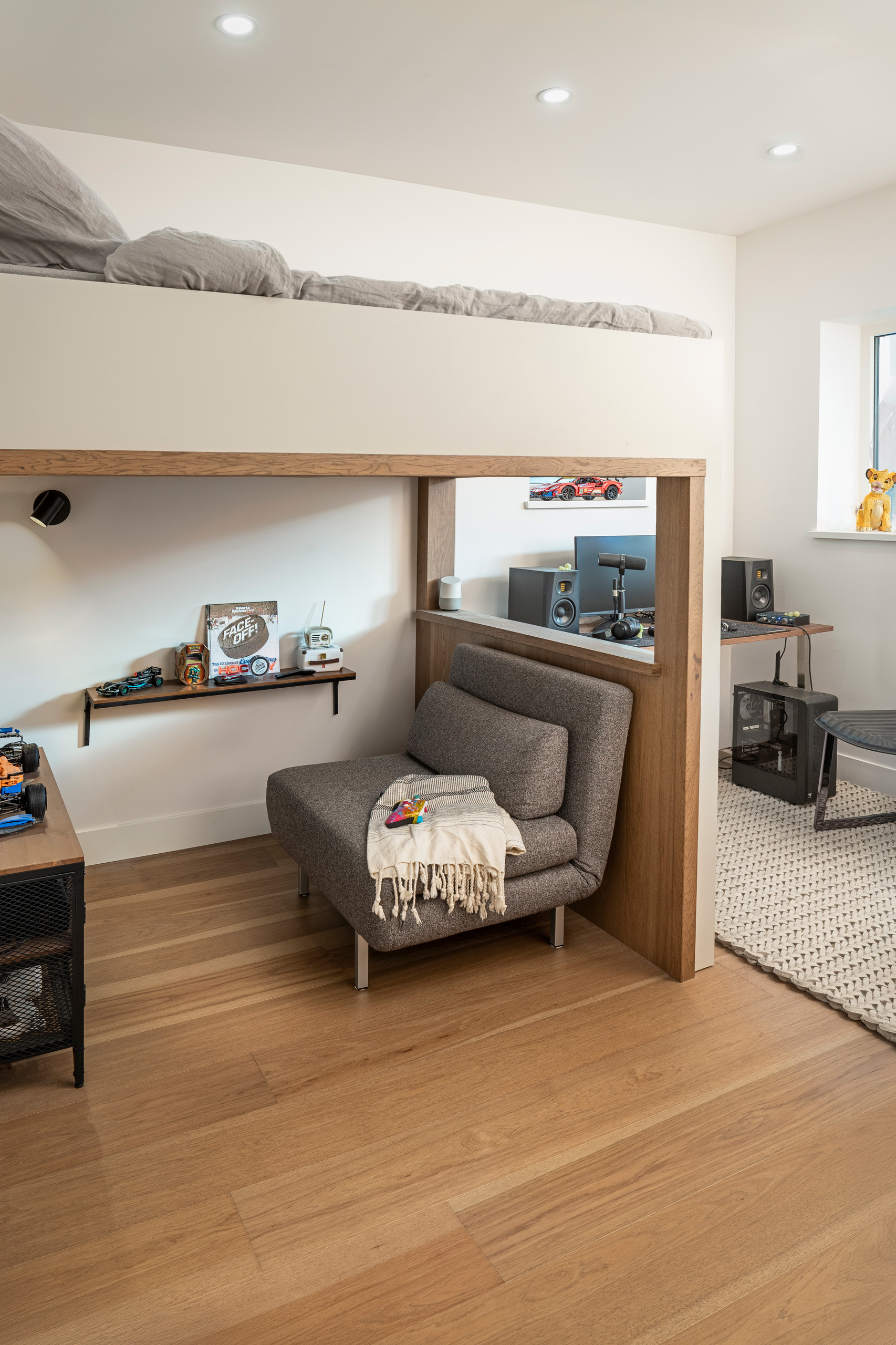
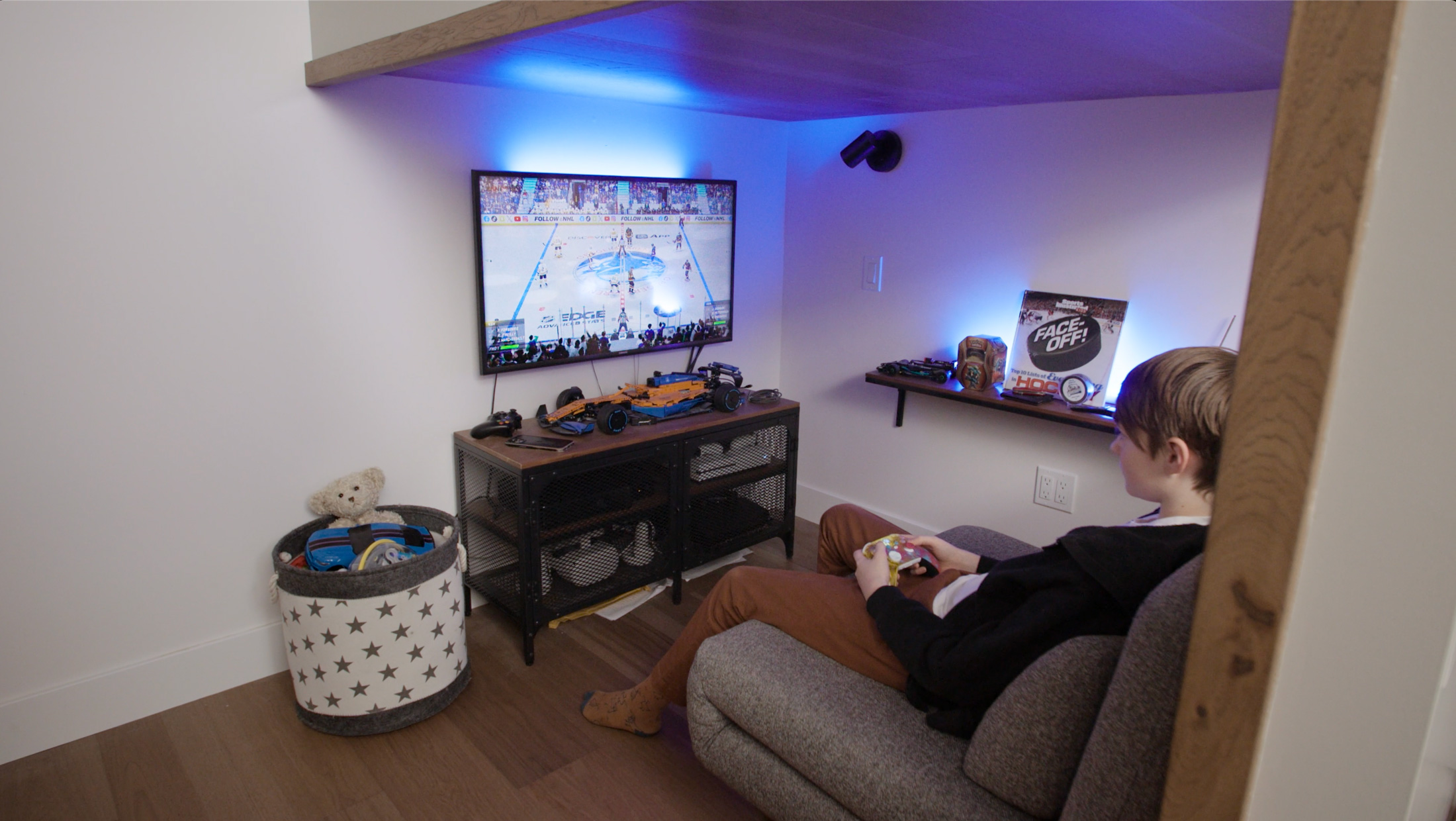
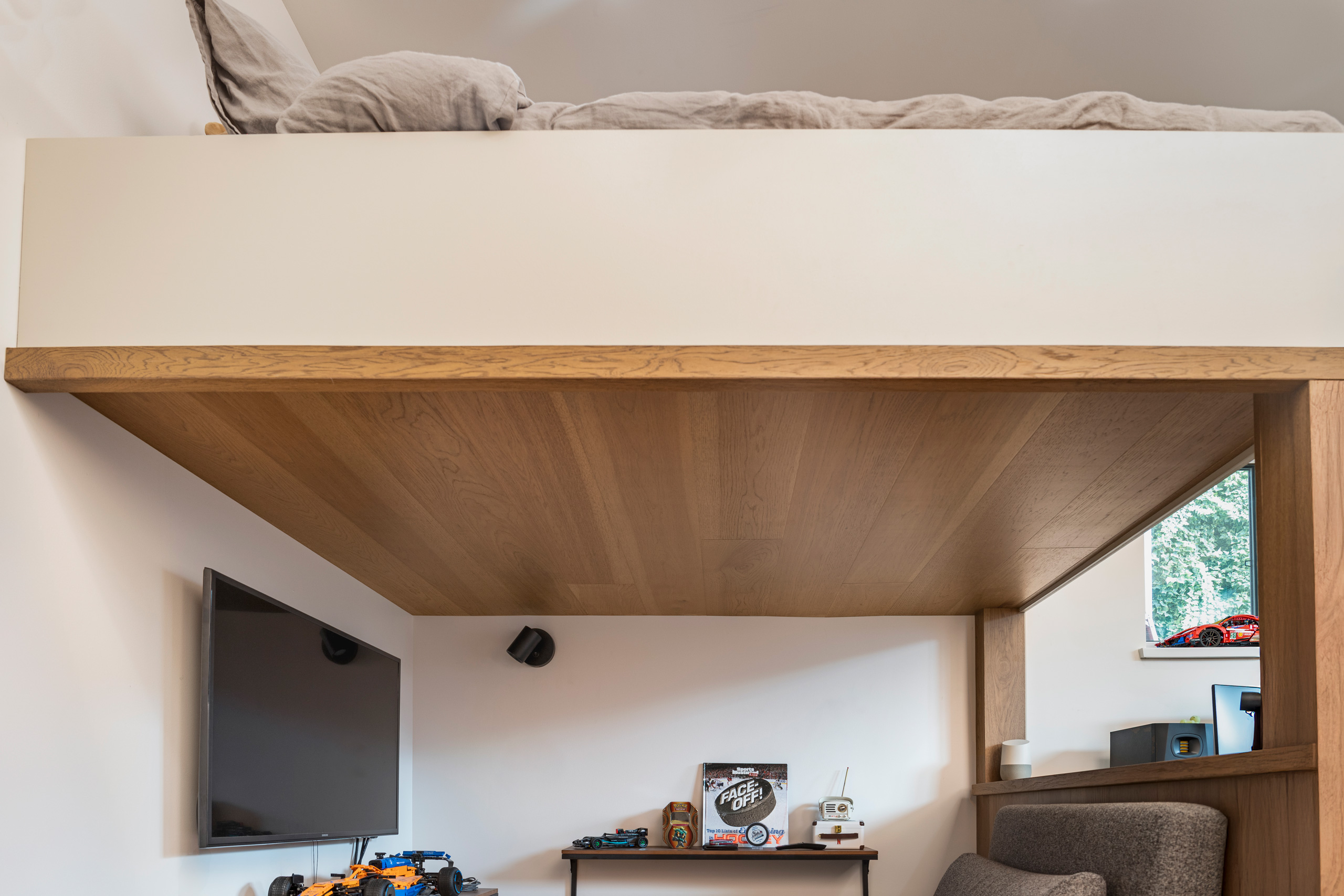
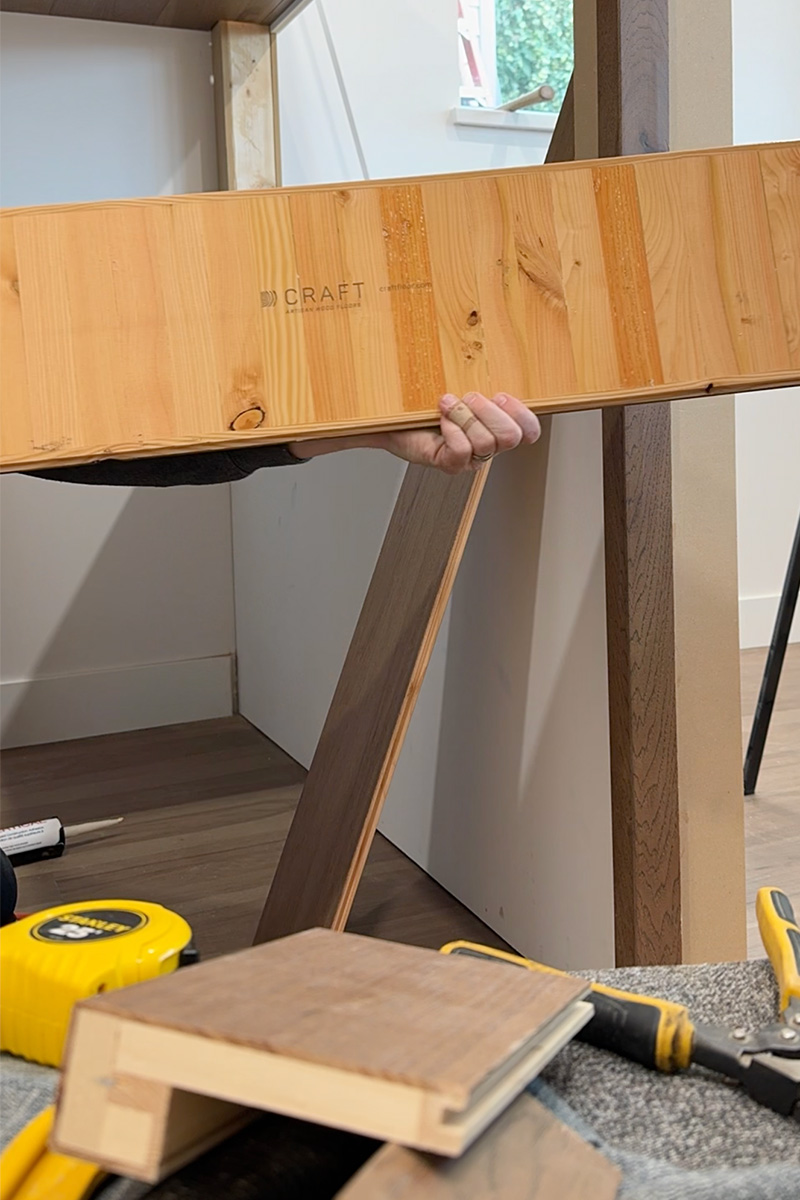
The downstairs level was planned around the kids: rooms they can settle into, and spaces they feel good bringing friends into. Todd carried that same care into the details—right down to a built-in bed finished in CRAFT Arezzo.
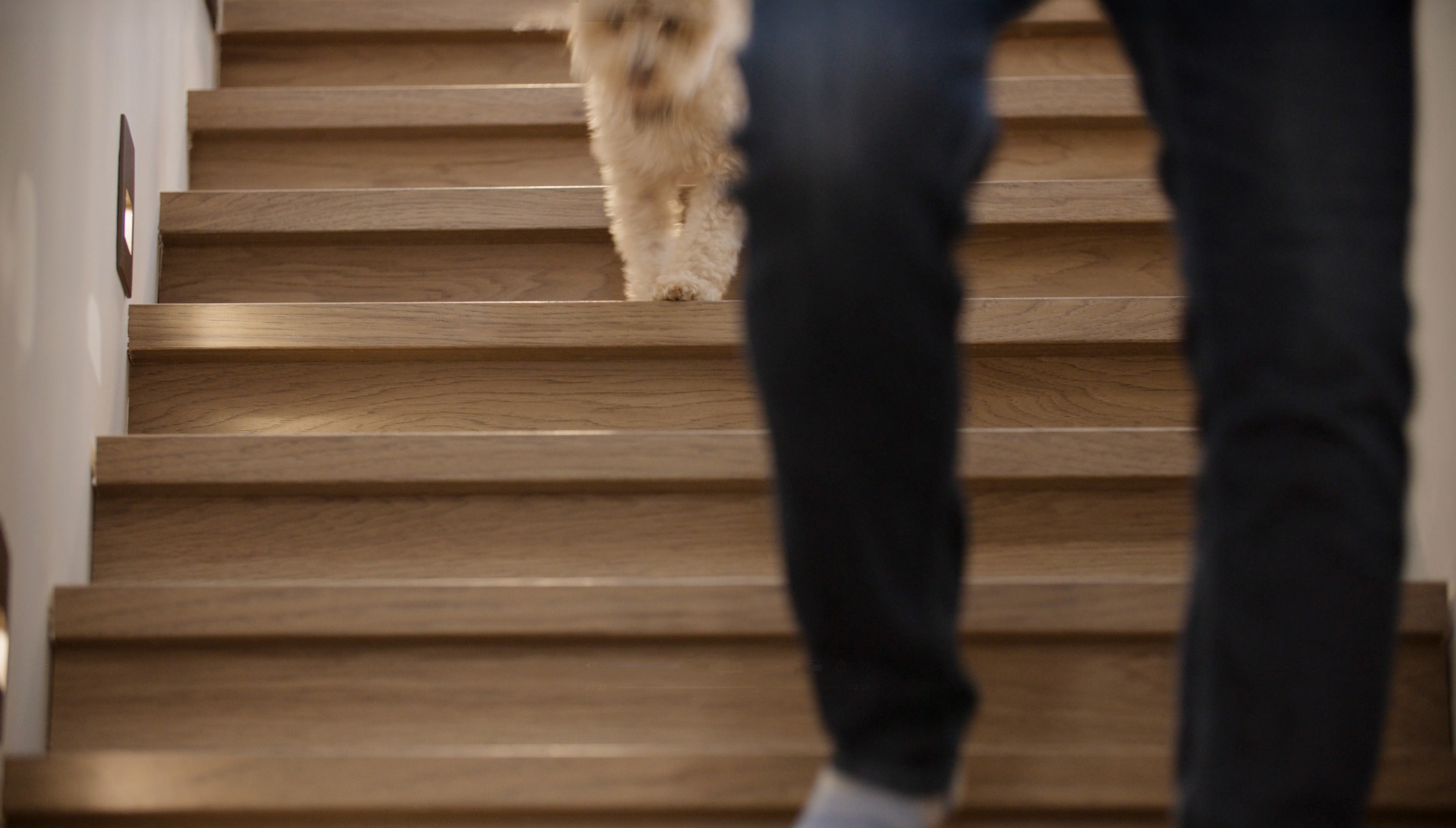
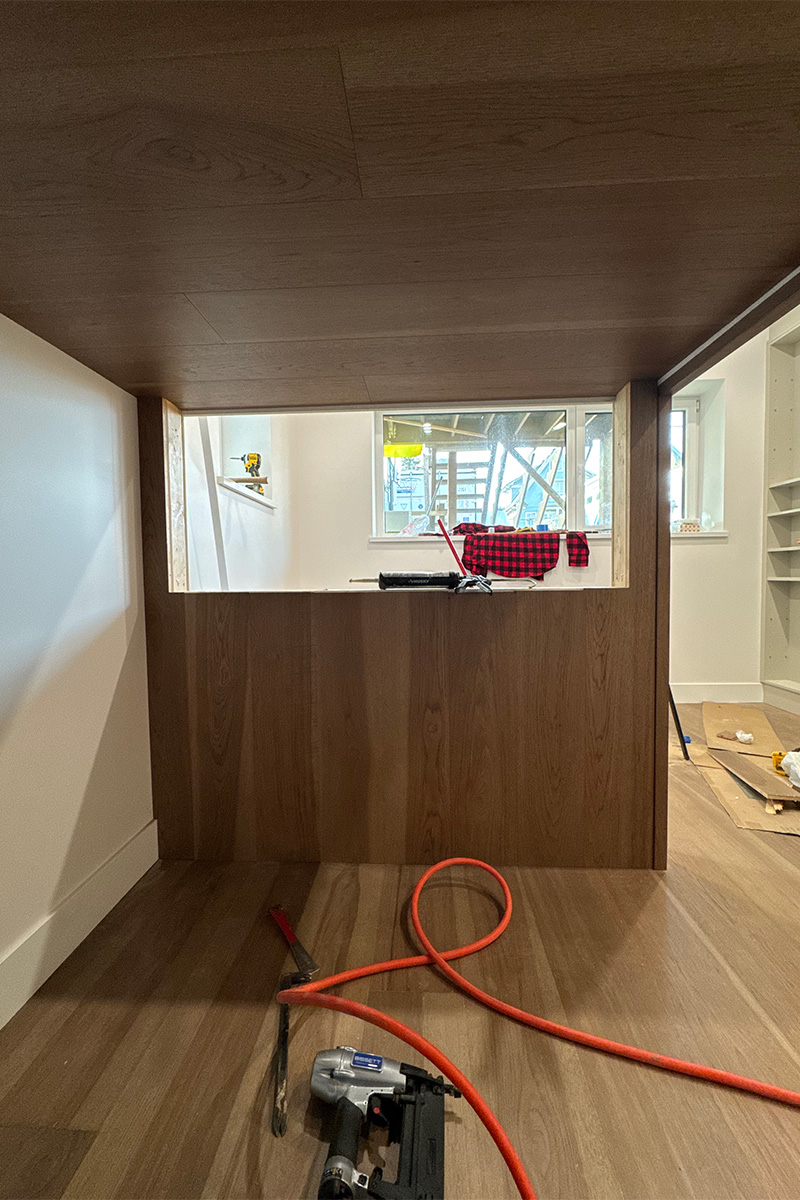
Todd built the bed using Arezzo on the surfaces, with stair nosing at the edges—durable detailing that fits in like part of the architecture.

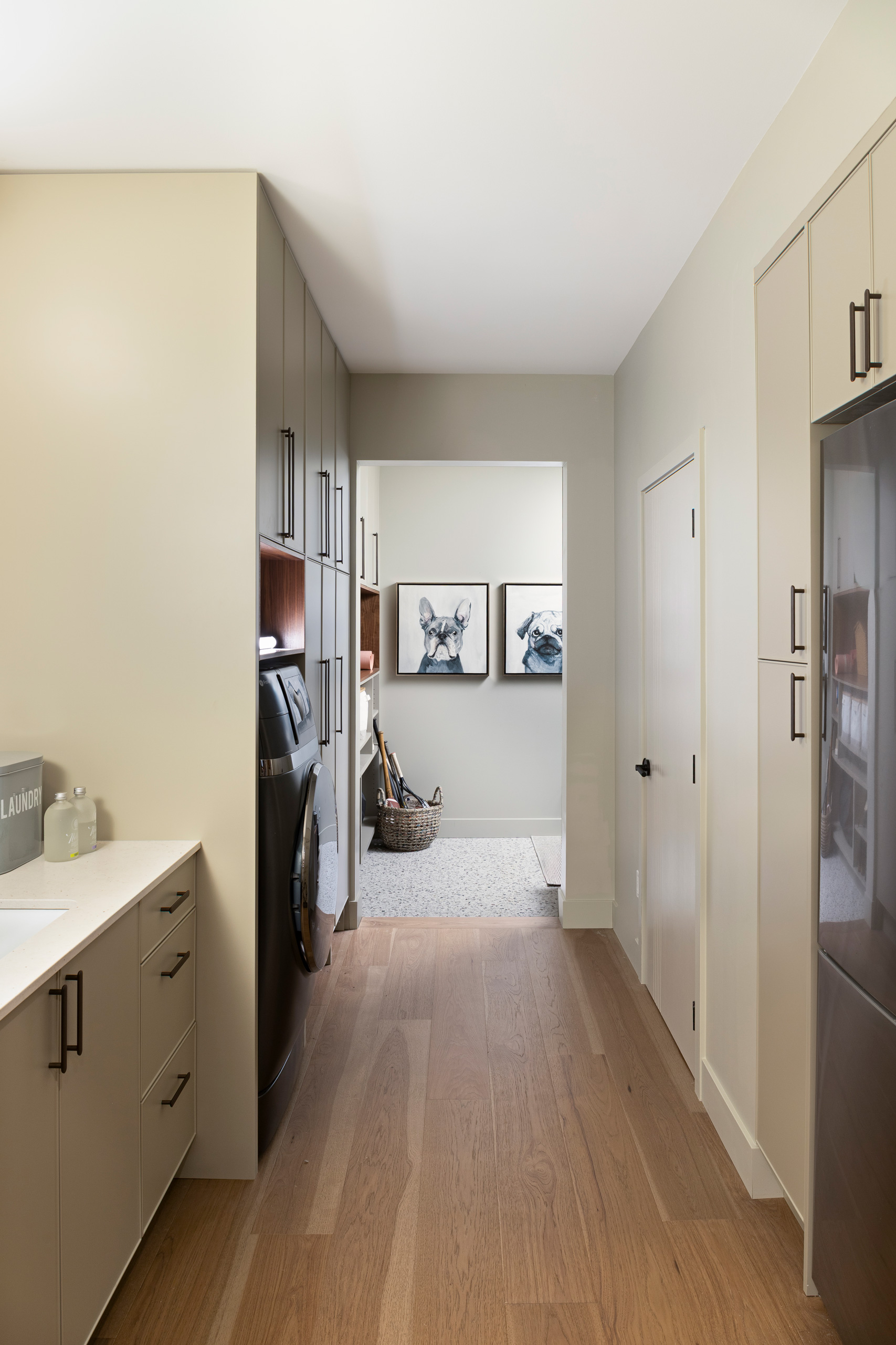
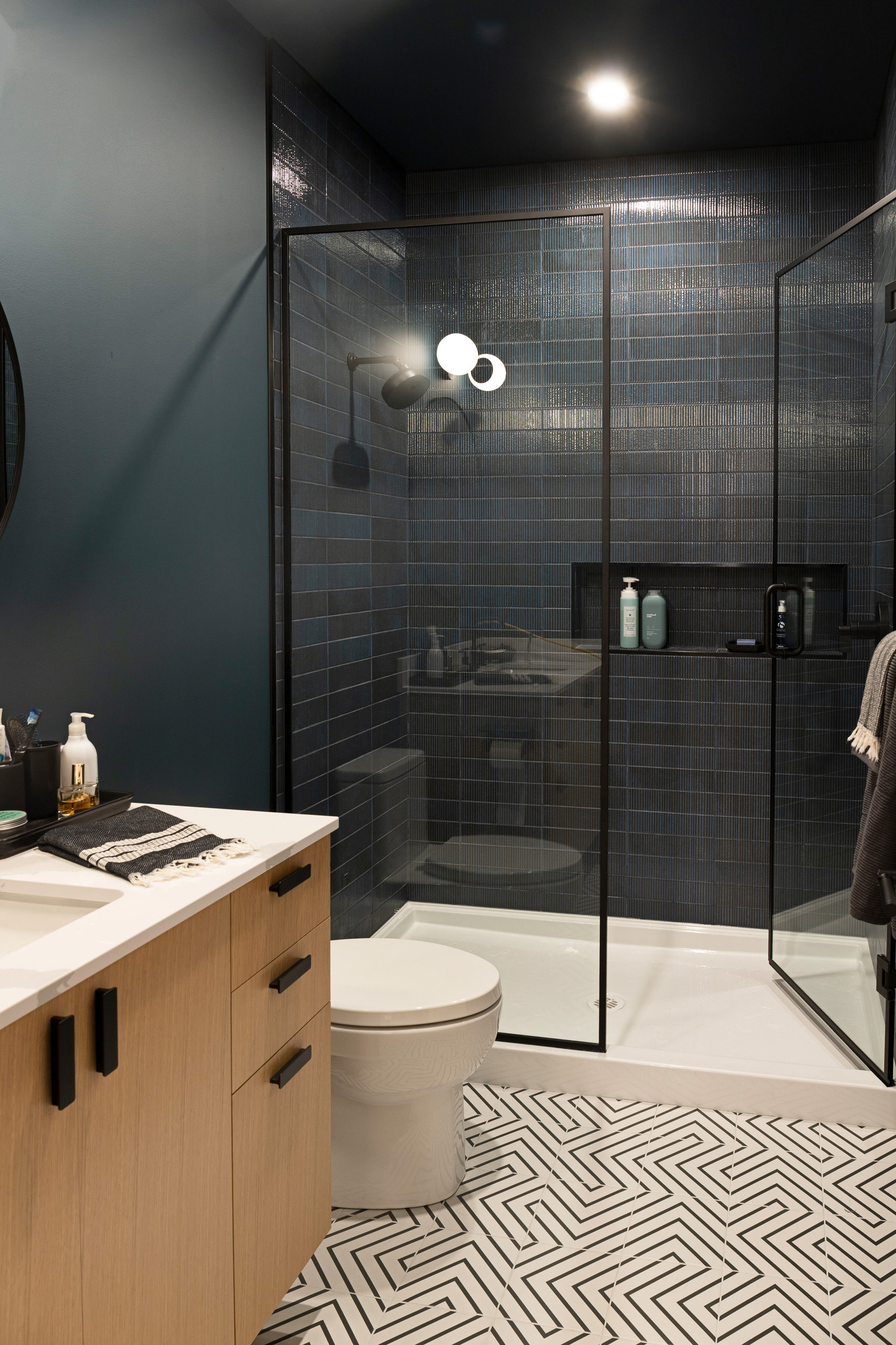
In a high-performance build, wet rooms reward careful detailing—clean lines, durable surfaces, and finishes that stay easy to maintain.
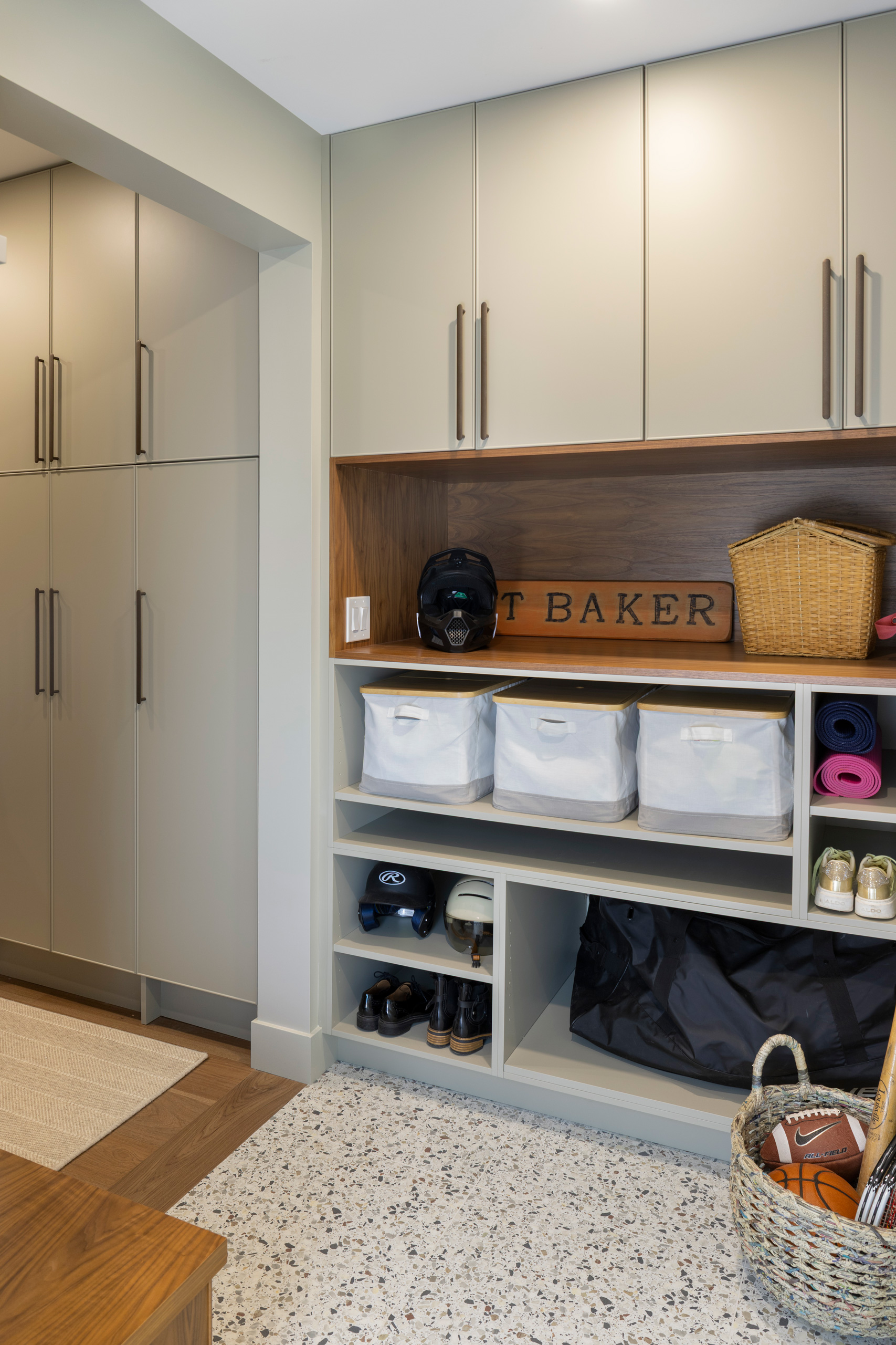
T: For our family, the laundry room and mud room are the engine of the house.
It’s a practical kind of comfort. Daily traffic lands here and the main floor stays calm. It’s easier to say yes when the kids want friends over.
The Talbot home is a high-performance build that feels natural to live in. The plan supports daily life, and the finishes are made to perform under real use—shoes at the door, coats and bags, meals, friends.
With Todd and Rebecca’s background in performance arts, the house was shaped with the same kind of care: clear direction, patient work, and details that last. The measure is simple. The kids bring people home. Friends gather upstairs or downstairs. The house stays quiet, steady, and comfortable.
In addition to this Space Story, there is a full video home tour feature tour available on You Tube now.