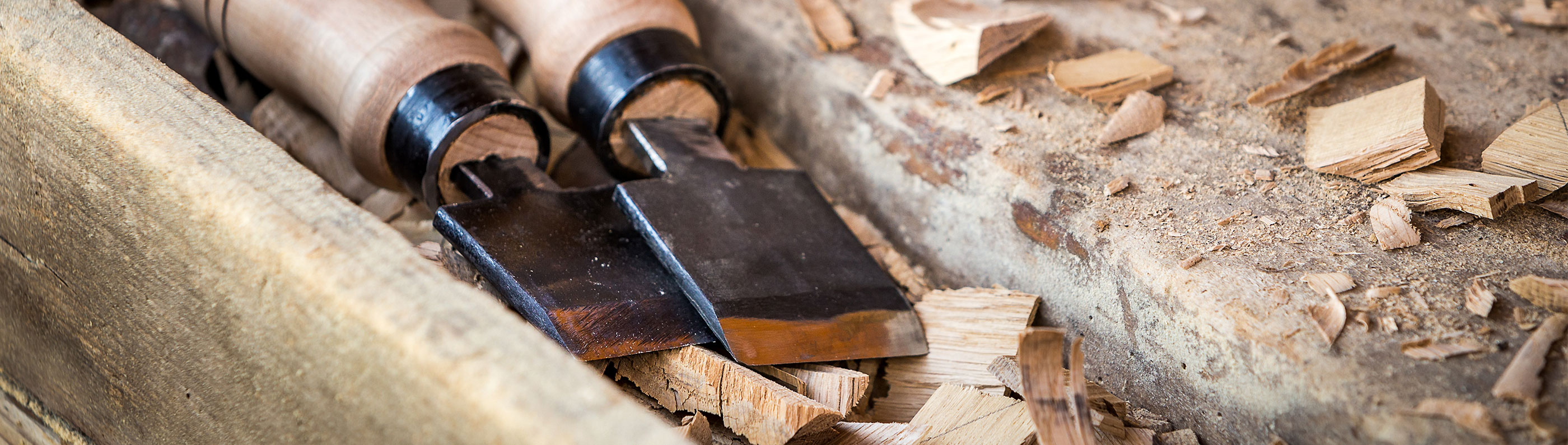
All of the veneers used in CRAFT’s floors are solid-sawn, meaning that our floors can be sanded and refinished multiple times, extending the life and value of a CRAFT floor for generations.
How a CRAFT Floor Is Made
CRAFT built its reputation as an artisan wood flooring specialist through a deep understanding of wood
Today, our engineered hardwood floors are made through a closely managed manufacturing process designed to deliver both beauty and reliability.

Each stage plays a role in shaping the beauty, stability, and quality of the finished floor.
The CRAFT Difference – Lumber Sourcing
CRAFT makes its own lamellas (wear layers) from responsibly sourced North American hardwood lumber. The wood we use is carefully selected for beautiful colour, strong grain character, and overall visual quality, and is sourced from leading lumber mills in the United States. In many cases, the most desirable wood comes from the colder northern boundaries of its natural growing region, where slower growth can produce tighter grain and refined colour variation.

Careful lumber sourcing from northern growing regions helps create flooring with refined colour, tight grain, and consistent visual character. This upstream attention to wood quality helps set the stage for everything that follows.
RE-SAWING LAMELLAS: PRECISION FROM THE START
One of the most important early steps in making a CRAFT floor is transforming hardwood lumber into solid-sawn lamellas (wear layers). Planks of hardwood lumber are first ripped and planed, then cut to the required dimensions before moving through a high-precision frame saw. This careful re-sawing process allows CRAFT to produce its own lamellas from solid lumber, maintaining close control over thickness, quality, and appearance from the very beginning. This early-stage precision helps set the foundation for the beauty and consistency of a CRAFT floor.
After re-sawing, each lamella is inspected and any unsound or unusable areas are removed. This step may appear simple, but it plays an important role in shaping the final look of the floor. Careful judgment at this stage helps determine the quality and beauty of the finished wear layer.

Precision machinery shapes each lamella, but careful human judgment remains essential in preparing it for the finished floor. By producing and refining our own lamellas in-house, CRAFT maintains closer control over the quality of the finished wear layer.
Lamella Colour Sorting: Where Beauty Begins
Colour sorting is one of the most important early steps in shaping the final look of a CRAFT floor. Because wood in its raw form is highly variable in tone, grade, and grain pattern, CRAFT’s wood artisans carefully hand-sort lamellas into groups with similar aesthetics to create beautiful, uniform floors with consistent grade, pattern, and wood tone.
CRAFT makes its own lamellas (wear layers) from responsibly sourced North American hardwood lumber. By producing and sorting our own wear layers, we maintain greater control over colour, grain pattern, and visual consistency than brands that purchase pre-made veneer components.

CRAFT artisans sort lamellas by wood colour, grain pattern, and grade characteristics to create floors with a more consistent and beautiful overall appearance. This careful, hands-on sorting process is one of the details that gives CRAFT floors their refined, natural appearance.
WOOD CONDITIONING: BUILT FOR STABILITY
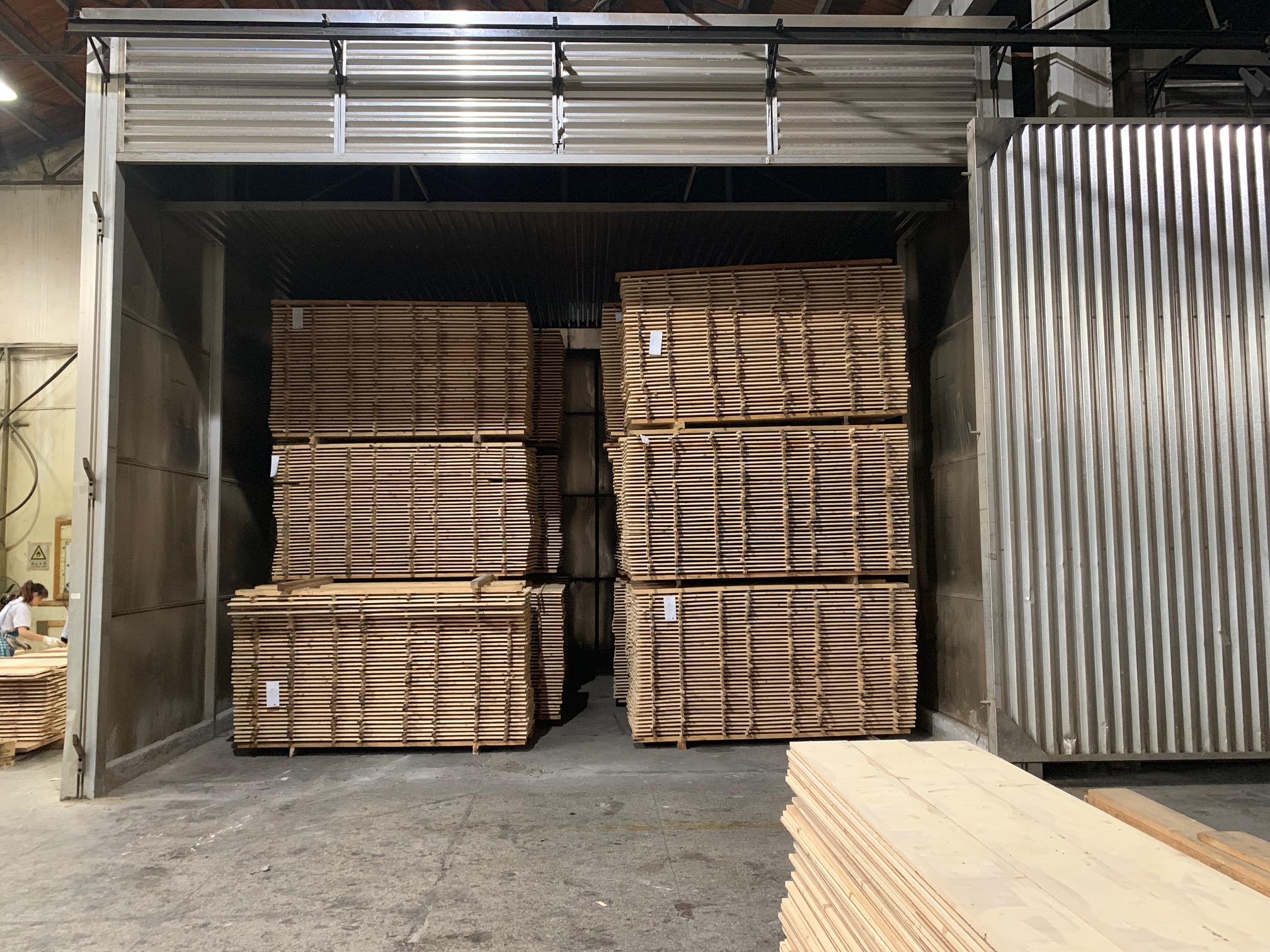
Before lamellas are glued to the structural core, both components are conditioned separately through a precisely controlled 84-hour schedule in custom-designed conditioning kilns. This important step helps relieve residual internal stresses within the wood fibres before assembly. By stabilizing both layers in advance, CRAFT helps create a more reliable engineered structure with strong dimensional stability. It is one of the process details that supports the long-term performance of our floors across a wide range of interior environments.
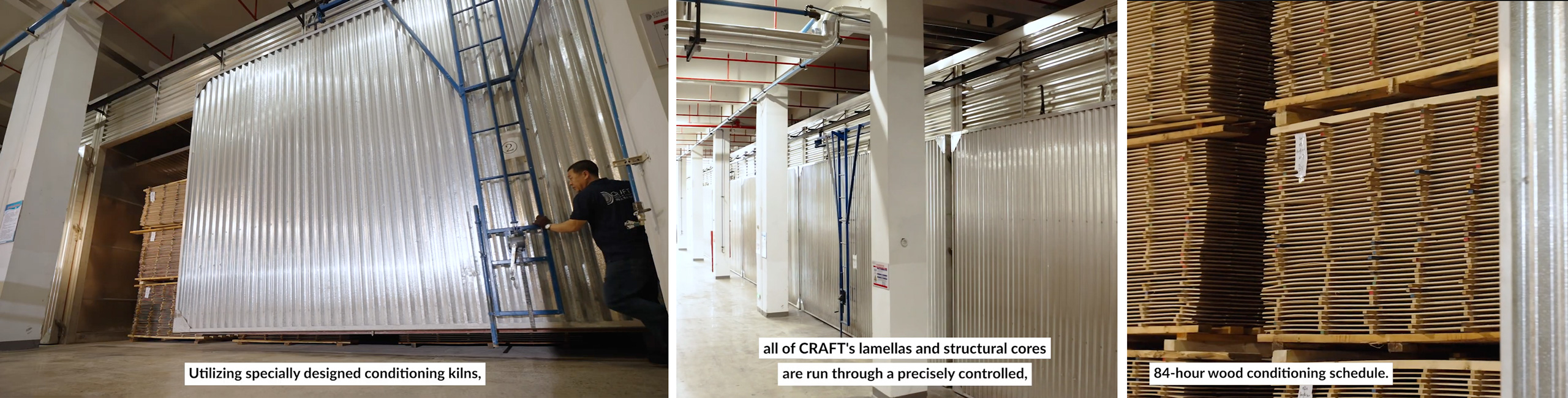
Custom-designed conditioning kilns help prepare lamellas and cores for stable long-term performance.
CRAFT’s Engineered Construction
True solid plank look with engineered stability. CRAFT’s construction is designed for structural stability and dependable long-term performance, and is suitable for radiant heat and below-grade installations.
15mm / 5/8” Thick, Engineered Structure
Hardwood Wear Layer
Made from responsibly sourced North American hardwood, CRAFT’s solid-sawn lamellas are produced and sorted in-house for greater control over colour, grain, and overall appearance.
A Stable Core for Long-Term Performance
Engineered to support the hardwood wear layer above, CRAFT’s structural core helps the floor remain stable through seasonal changes in indoor humidity and temperature. Built from structural-grade eucalyptus plywood, it provides strong structural stability and reliable performance. Plywood’s dimensional stability comes from its seven-ply layered construction: each hardwood ply is oriented at 90° to the next, reinforcing the panel and creating a stable, reliable structural platform. PEFC-certified sourcing supports responsible material selection and traceability.
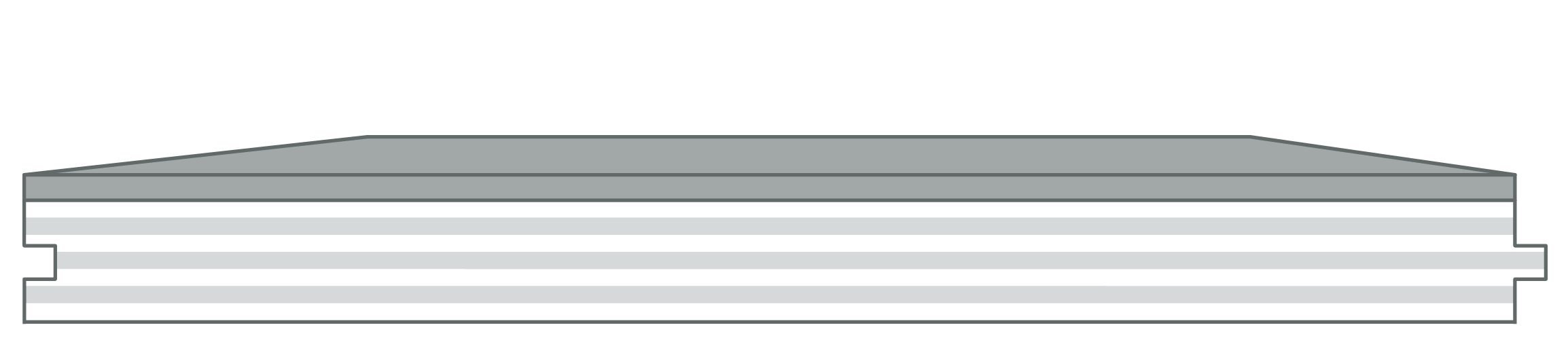
SURFACE – Solid-sawn 3.0mm Veneer
- True solid plank look with engineered stability
- Responsibly sourced North American hardwood from leading mills
- Conditioned prior to assembly to support long-term floor stability
- 3.0mm veneer allows for 2–3 re-sandings
- Highest-quality formaldehyde-free, low-VOC wood glue
- All CRAFT floors are RED LIST FREE and GREENGUARD Gold certified for a healthy living environment and excellent indoor air quality
Wood Adhesive – Used to Glue All Components Together
STRUCTURAL CORE – 12mm
- Eucalyptus multi-ply hardwood core
- Origin: Thailand; PEFC-certified sourcing supports responsible material selection and traceability
- Dense, uniform hardwood structure suited to stable, reliable structural cores
- Seven-ply plywood construction helps resist cupping and width shrinkage
Why Solid-Sawn Lamellas Matter
Many hardwood flooring manufacturers, especially those that make thin ½” and 9/16” products, use very thin rotary peeled or sliced veneers. This peeling or slicing process can negatively affect the structural integrity of the veneers, and it considerably degrades their appearance. The net result is a veneer that’s typically too thin to be re-sanded even one time, and a wood pattern that can look strange or inauthentic. Given that such thin-veneer flooring cannot be re-sanded, it ends up being “single-use” material which negatively impacts its overall lifetime value, and results in a lower-ranking from an environmental perspective.
In contrast, the veneers in high quality, long-lasting engineered flooring are made by way of the “solid-sawn method”, whereby veneers are sawn in thick layers from planks of hardwood lumber. This process retains the wood’s structural integrity and results in the most natural, aesthetically pleasing grain patterns.
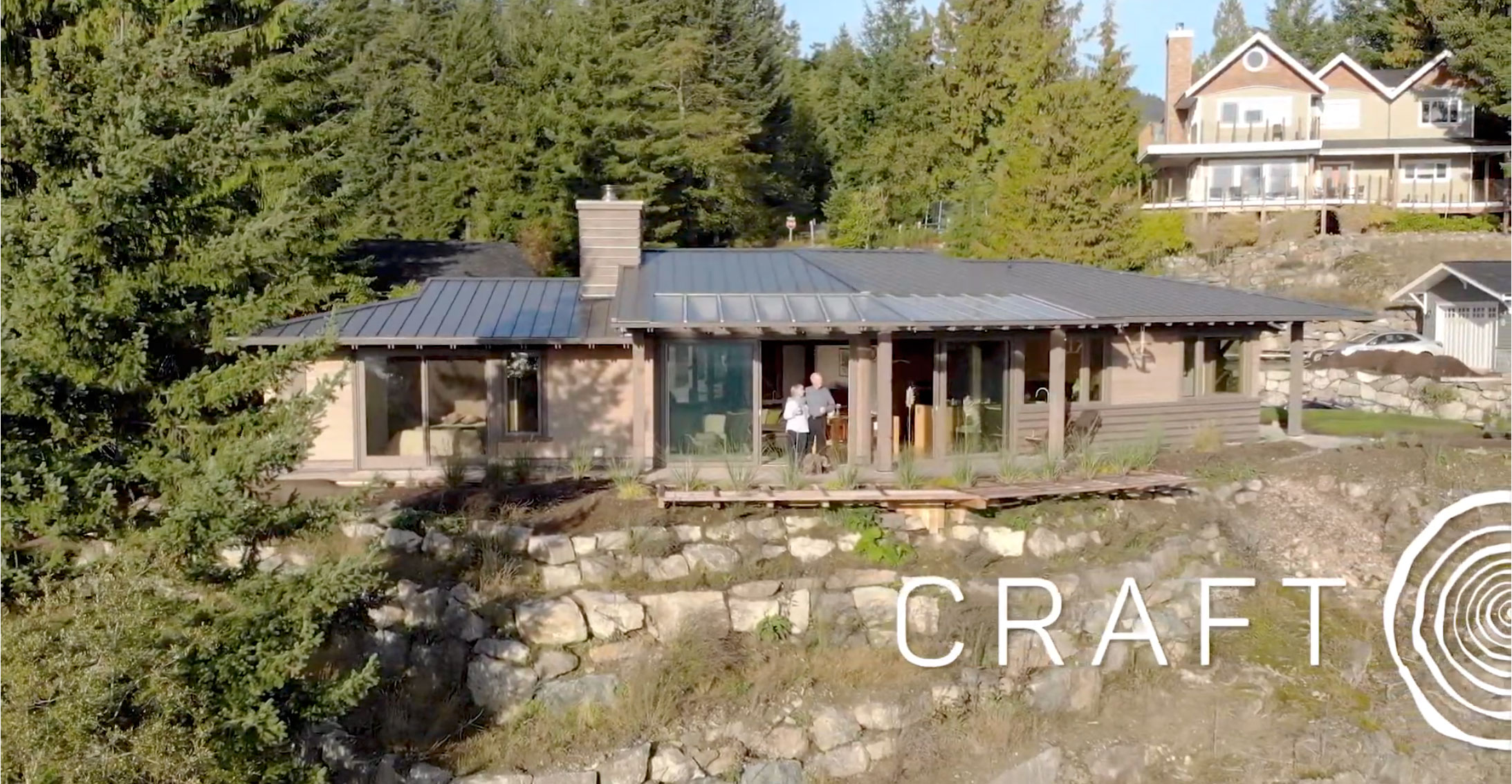
CRAFT's Core in the field
Allan Peters MRAIC, A.W. PETERS & ASSOCIATES LTD explains his choice of CRAFT for homes that require high-quality wood flooring with dependable structural stability—allowing for features such as built-in radiant heat.
Final Inspection: The Last Step Before Approval
Before release, every CRAFT floor passes through a final inspection step where boards are reviewed for colour, consistency, and overall quality. This final layer of human oversight helps ensure that the finished floor reflects the standards established throughout the making process.
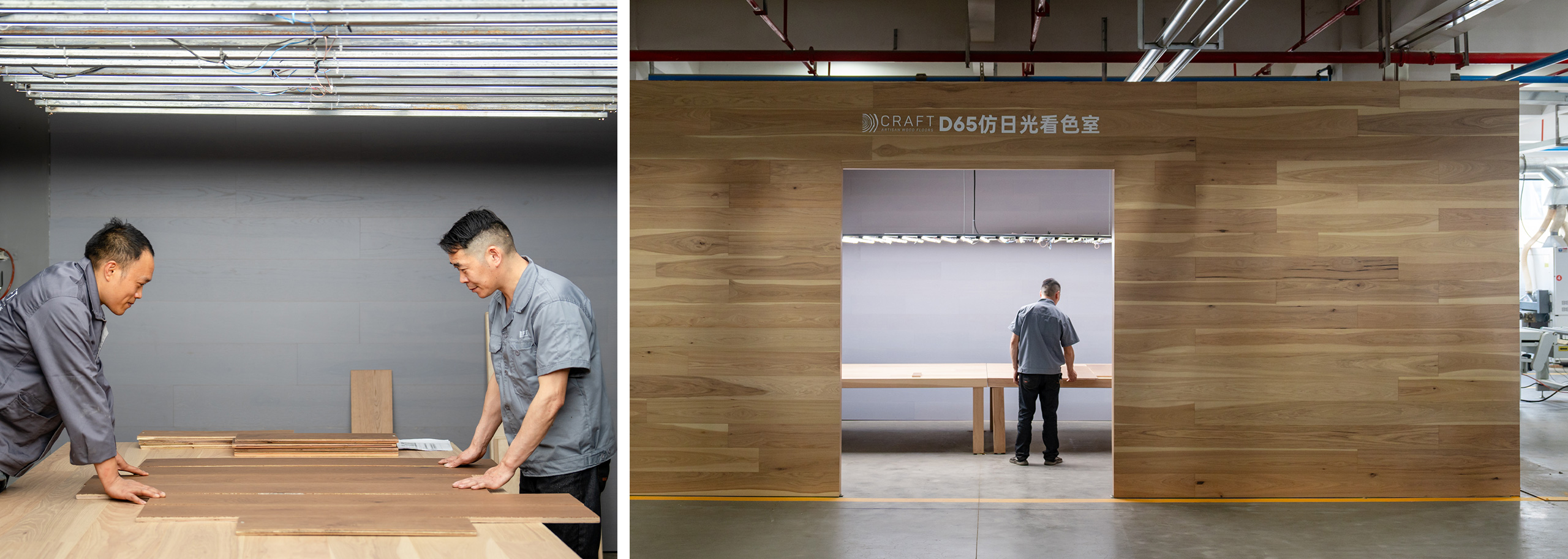
Careful inspection is the last step in translating disciplined manufacturing into the beauty, quality, and confidence of the finished floor.
Why It Works Together
A CRAFT floor is shaped through carefully sourced lumber, in-house lamella production, artisan sorting, controlled conditioning, and durable finishing. This closely managed making process gives every floor its refined natural beauty, dependable stability, and long-term performance.